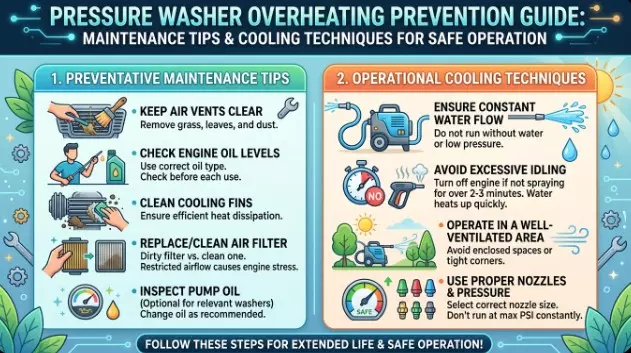
A pressure washer is one of the most powerful cleaning tools for homes and commercial use, but it also has a critical weakness—overheating. When the system runs too hot, it can damage the pump, reduce cleaning performance, and even lead to permanent failure.
Understanding how to keep pressure washer from overheating is essential if you want consistent performance and a longer machine lifespan. Most overheating problems are preventable with proper water flow, correct usage habits, and routine maintenance. In this guide, you’ll learn exactly how professionals prevent overheating and keep their machines running efficiently for years.
Short Answer — How to Keep Pressure Washer from Overheating?
To keep a pressure washer from overheating, ensure proper water flow, avoid running it dry, clean nozzles regularly, follow duty cycle limits, and allow cooling breaks during use. Most overheating issues are caused by restricted water supply or continuous operation without rest.
Why It’s Important to Know How to Keep Pressure Washer from Overheating?
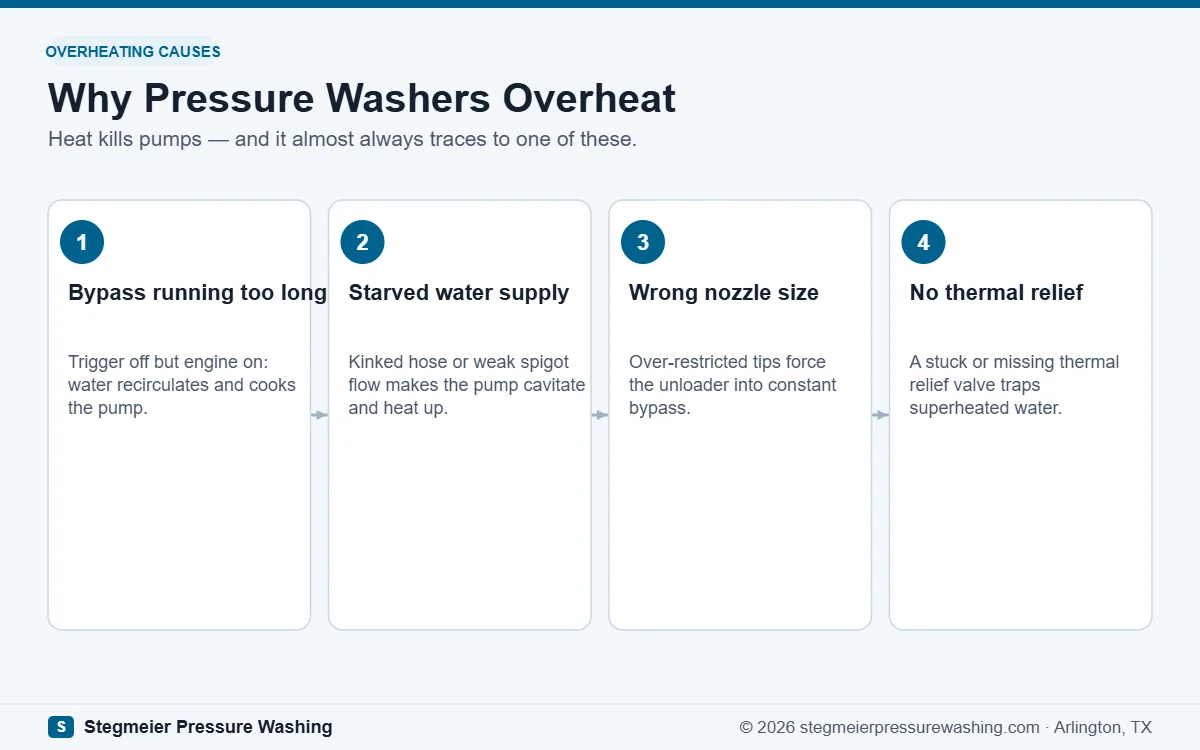
How Overheating Affects Pressure Washer Performance
When a pressure washer overheats, it can cause serious and expensive damage:
- Damages pump seals and internal components
- Reduces motor efficiency and lifespan
- Causes pressure loss during operation
- Leads to costly repairs or full pump replacement
Over time, repeated overheating shortens the machine’s usable life significantly.
Common Causes of Pressure Washer Overheating
- Running the machine without water flow
- Clogged nozzles or hoses
- Using incorrect extension cords (electric models)
- Overworking beyond duty cycle limits
- Poor ventilation in gas-powered units
Most of these issues come down to improper usage rather than equipment failure.
Signs Your Pressure Washer Is Overheating
Warning Signs to Watch For
- Machine shutting off automatically
- Burning smell from motor or pump
- Reduced pressure output
- Excess vibration or unusual noise
- Hot pump housing or motor casing
Performance Issues Caused by Heat
- Inconsistent spray pattern
- Loss of cleaning power
- Frequent restart requirement
- Increased fuel or electricity usage
If you notice these symptoms, the unit is already under thermal stress.
How to Keep Pressure Washer from Overheating?
Step 1 — Ensure Proper Water Supply Flow
Water is the cooling system for your pressure washer.
- Always connect to a steady water source
- Check hose for kinks or blockages
- Maintain minimum required water pressure
Low water flow is one of the most common overheating causes.
Step 2 — Never Run the Pump Dry
Running dry creates instant heat buildup.
- Always purge air before starting
- Turn off immediately if water stops flowing
- Avoid dry firing even for a few seconds
Step 3 — Clean Nozzles and Filters Regularly
Blocked components restrict flow and increase heat.
- Remove dirt and mineral buildup
- Replace worn spray tips
- Use correct nozzle size for PSI rating
Step 4 — Follow Duty Cycle Guidelines
Every machine has a usage limit.
- Allow rest periods during long cleaning jobs
- Avoid continuous operation beyond manufacturer limits
- Use intermittent cleaning breaks
Step 5 — Maintain Proper Ventilation
Heat needs to escape efficiently.
- Keep gas engines in open airflow areas
- Avoid enclosed or tight spaces
- Clear debris around cooling vents
Step 6 — Use Correct Extension Cords (Electric Units)
Incorrect wiring causes overheating.
- Use heavy-duty rated cords
- Avoid long, thin, undersized cables
- Prevent voltage drop and motor strain
Preventing Pressure Washer Overheating
Step 1 — Inspect Water Supply Before Use
Ensure strong, uninterrupted water flow.
Step 2 — Check Hoses, Filters, and Nozzles
Look for clogs or restrictions.
Step 3 — Start Machine with Full Water Flow
Never start dry.
Step 4 — Monitor Temperature During Operation
Feel for excessive heat in pump housing.
Step 5 — Take Cooling Breaks Every 15–30 Minutes
Especially during heavy-duty cleaning.
Step 6 — Shut Down Properly After Use
Release pressure and disconnect water supply.
Causes vs Prevention of Overheating
| Issue | Cause | Prevention |
|---|---|---|
| Low water flow | Clogged hose/nozzle | Clean filters regularly |
| Pump damage | Running dry | Always prime before use |
| Motor overheating | Continuous use | Follow duty cycle breaks |
| Electrical strain | Weak extension cord | Use heavy-duty cord |
| Blocked ventilation | Dirt buildup | Keep unit clean |
Common Mistakes That Cause Pressure Washer Overheating
Ignoring Water Supply Requirements
Low flow equals rapid heat buildup.
Using Wrong Nozzle Size
Incorrect nozzles restrict water movement.
Running Machine Continuously
No cooling breaks leads to overheating.
Skipping Regular Maintenance
Dirty filters and worn parts increase strain.
Poor Storage and Cleaning Habits
Dust and debris block ventilation systems.
Maintenance Tips to Prevent Overheating Long-Term
Clean Pump and Nozzle After Every Use
Prevents buildup that restricts flow.
Flush Water System Regularly
Removes internal debris.
Inspect Seals and Hoses for Wear
Prevents leaks and pressure loss.
Store in Cool, Dry Environment
Avoids heat damage and corrosion.
Schedule Seasonal Maintenance Checks
Keeps system operating efficiently year-round.
Sub-Questions People Also Ask About Pressure Washer Overheating
Why does my pressure washer keep overheating?
Usually due to restricted water flow or continuous use without breaks.
Can a pressure washer overheat from low water?
Yes, low water flow is one of the main causes.
How long can I run a pressure washer continuously?
Most units require a break every 15–30 minutes depending on duty cycle.
Does hot weather affect overheating?
Yes, high ambient temperature increases risk.
Can clogged nozzles cause overheating?
Yes, they restrict flow and trap heat.
How do I cool down a pressure washer quickly?
Turn it off, disconnect water, and allow airflow around the pump.
Is overheating dangerous for pressure washers?
Yes, it can permanently damage internal components.
Do electric pressure washers overheat faster than gas ones?
Electric models can overheat faster if airflow is restricted or cords are undersized.
FAQs About How to Keep Pressure Washer from Overheating?
What is the fastest way how to keep pressure washer from overheating?
Ensure strong water flow and take cooling breaks during use.
Can I prevent overheating with regular maintenance?
Yes, cleaning filters and nozzles significantly reduces risk.
Do pressure washers need cooling breaks?
Yes, especially during extended or heavy-duty cleaning.
What temperature is too hot for a pressure washer?
If the pump housing becomes too hot to touch, it is overheating.
Can using the wrong hose cause overheating?
Yes, restricted hoses reduce water flow and increase heat.
How often should I clean pressure washer filters?
After every few uses or whenever performance drops.
Is overheating covered under warranty?
Usually only if caused by manufacturing defects, not misuse.
Should I turn off the pressure washer during breaks?
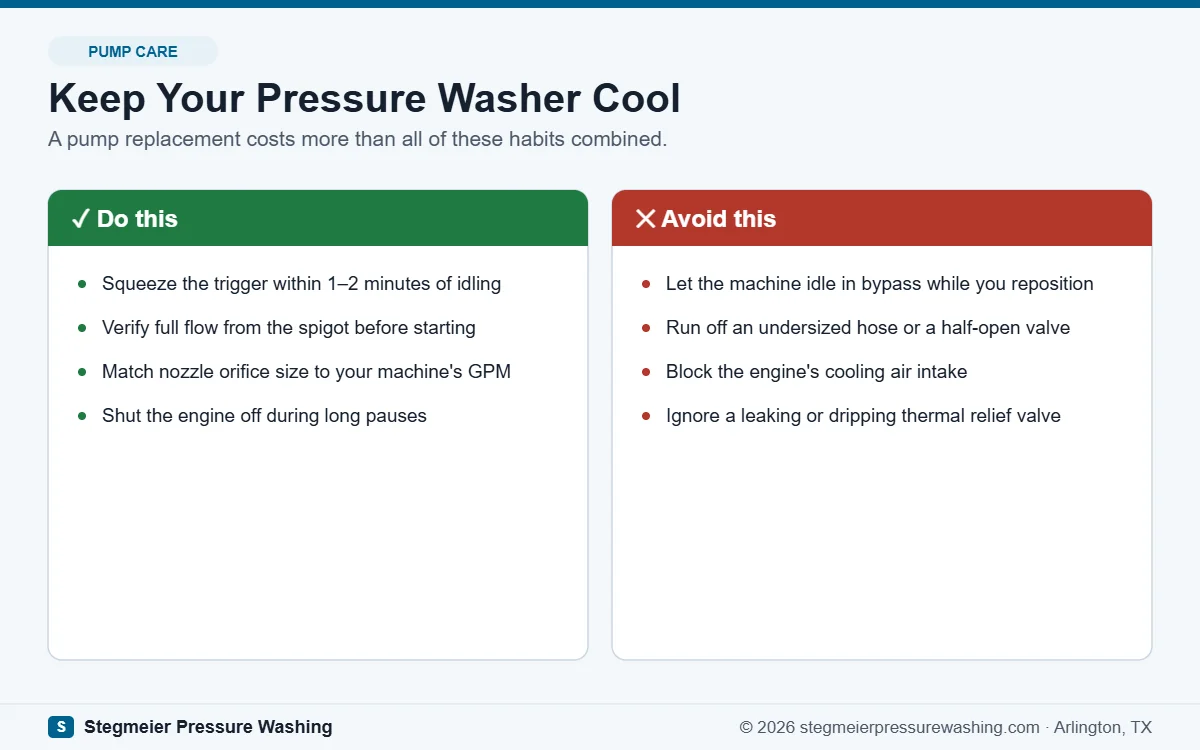
Yes, always shut it down during extended pauses.
Conclusion — Safe Way to Prevent Pressure Washer Overheating
Key Takeaways
- Proper water flow is essential for cooling
- Regular cleaning prevents internal strain
- Breaks and maintenance extend machine life
For a pump maker’s troubleshooting advice, see the pump troubleshooting guide from Cat Pumps.
Final Thoughts
Understanding how to keep pressure washer from overheating is the key to protecting your equipment and ensuring reliable performance. With proper water supply, regular maintenance, and safe operating habits, you can significantly extend the lifespan of your machine and avoid costly repairs. Whether for home use or professional cleaning, smart operation always delivers better long-term results.
Rather leave it to a pro? Stegmeier Pressure Washing uses commercial soft wash and surface cleaning equipment on homes across Arlington and DFW. See our pressure washing services. Book a free estimate or try our pressure washing cost calculator.