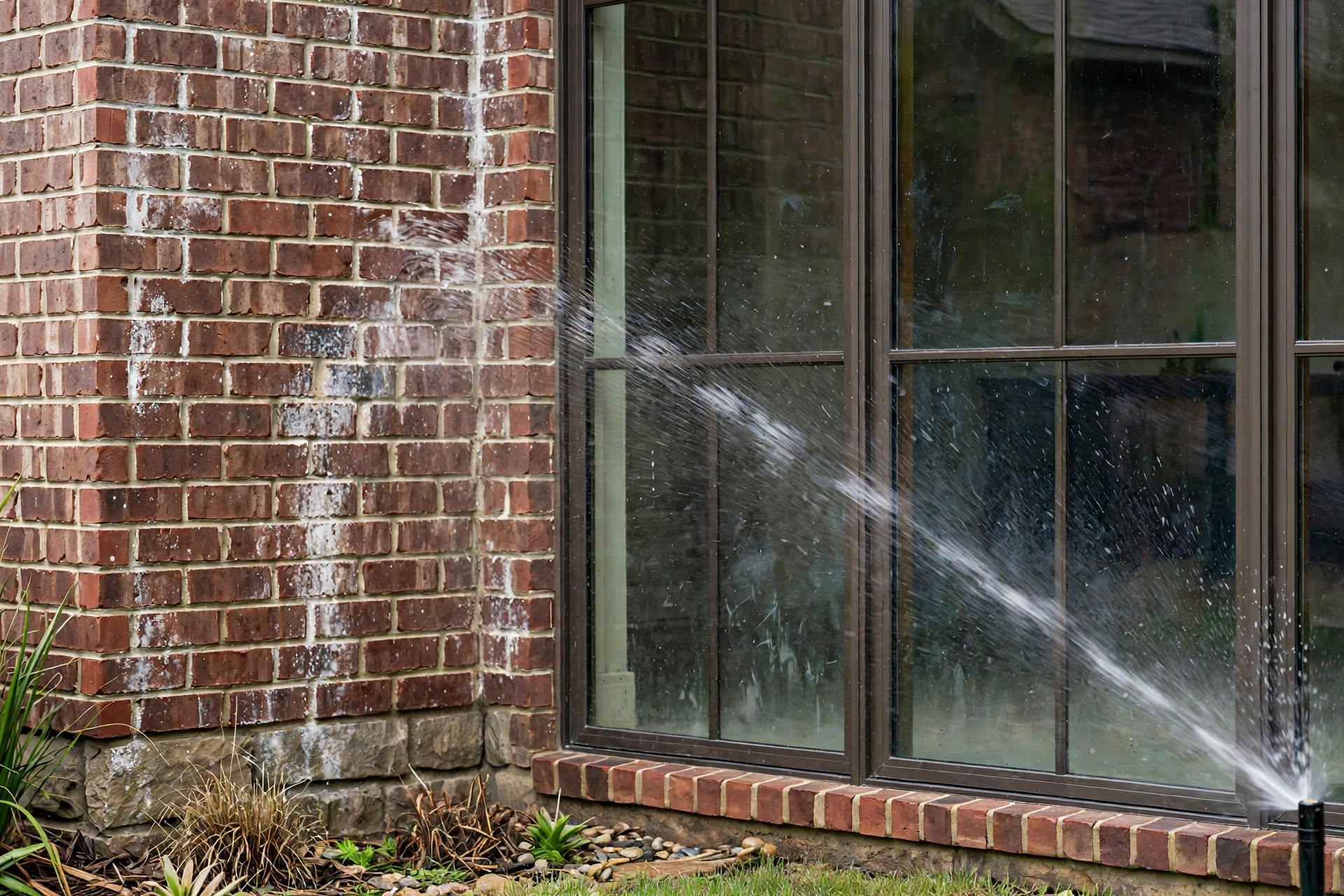
If you’ve noticed cloudy white spots on your windows or a chalky film building up on brick near your sprinkler heads, you’re dealing with hard water staining. This is one of the most common exterior issues homeowners run into across North Texas, and it comes down to the minerals in the water hitting glass and masonry over and over again until they leave a mark that doesn’t just rinse away.
Once these spots set in, they can be tough to deal with, but knowing what causes them makes it a lot easier to get ahead of the problem.
What Hard Water Actually Is
Hard water contains higher levels of dissolved minerals, mainly calcium and magnesium, compared to soft water. Most of North Texas deals with moderately hard to hard water, depending on the specific water source and city, and that mineral content is what leaves behind the white, chalky residue people notice on glass and brick.
Every time water evaporates off a surface, it leaves behind the minerals that were dissolved in it. A little bit of this happens naturally with rain, but sprinkler systems make the problem worse because they hit the same spots on windows and walls over and over, day after day, giving the minerals plenty of chances to build up.
Why Sprinklers Are the Main Culprit
Sprinkler heads positioned too close to a house often spray directly onto windows, brick, or siding instead of staying contained to the lawn or flower beds. Because this happens on a set schedule, sometimes daily during hot months, the same surfaces get hit with mineral rich water again and again, and the buildup accumulates a lot faster than it would from rain alone.
Homes with older or poorly adjusted sprinkler systems tend to have the worst hard water staining, since the spray pattern often reaches farther than it should and lands directly on windows and lower brick sections of the house.
What Hard Water Spots Look Like
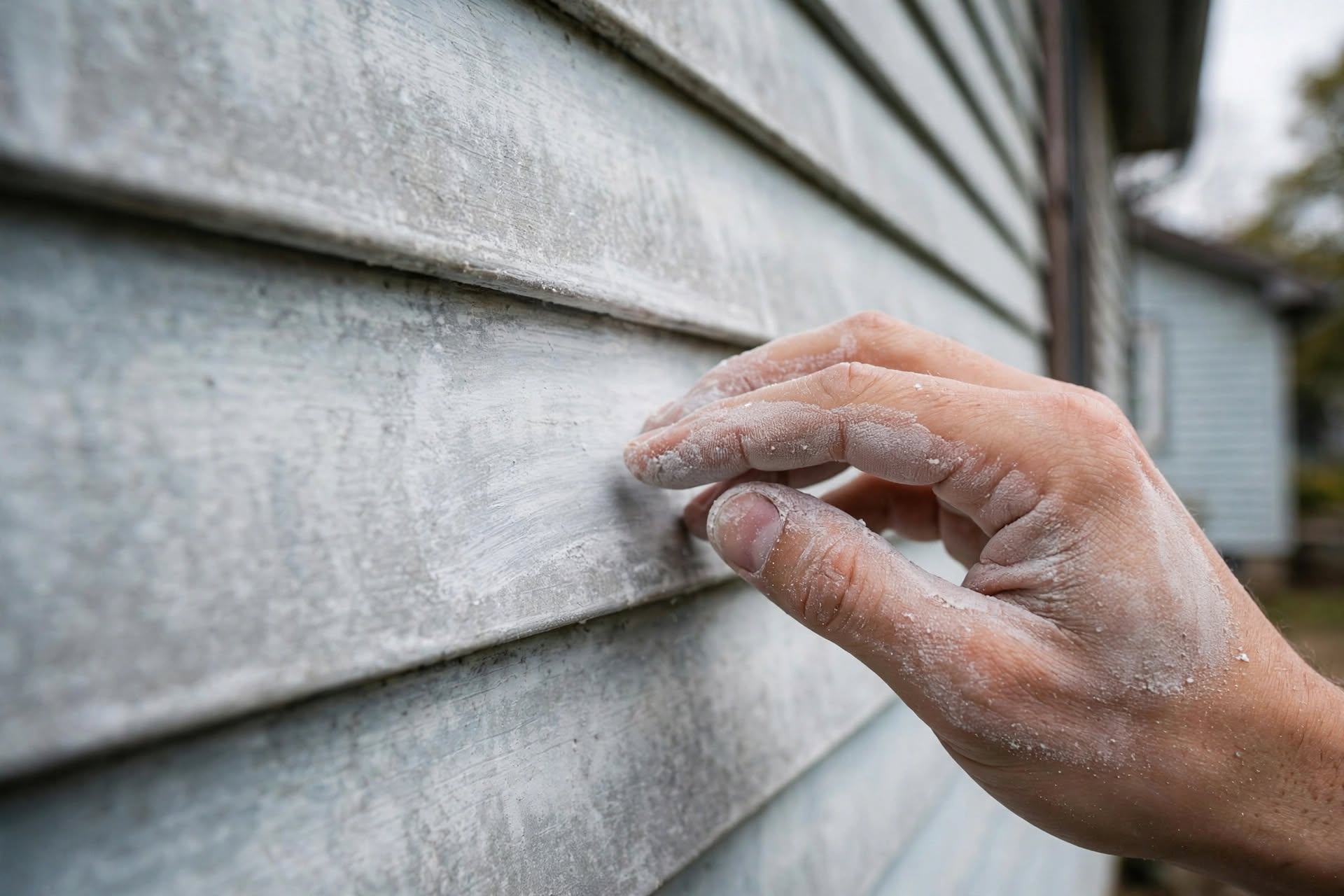
On glass, hard water spots usually show up as cloudy, white, or slightly rainbow tinted marks that can look like the window just needs a wipe down, but don’t actually clean off with regular glass cleaner. On brick, the staining tends to look more like a white, powdery film sitting on the surface, sometimes called efflorescence when it comes from minerals working their way out of the brick or mortar itself.
The Difference Between Sprinkler Staining & Efflorescence
Sprinkler related hard water spots sit on the surface of the brick and come from external mineral deposits left behind by water spray. Efflorescence, on the other hand, comes from inside the brick or mortar, where moisture pulls salts and minerals to the surface as it evaporates. Both can look similar at first glance, but they come from different sources and sometimes need slightly different treatment.
Why Regular Cleaning Doesn’t Remove Hard Water Stains
Standard glass cleaner or a simple rinse usually isn’t enough to fully remove hard water spots, since the minerals have already bonded to the surface rather than just sitting loosely on top. This is especially true for spots that have had weeks or months to build up, since each new round of sprinkler spray adds another thin layer of mineral residue on top of the last.
Why the Problem Gets Worse Over Time
Hard water staining tends to compound the longer it’s left alone. Each cycle of water evaporating and leaving minerals behind adds to what’s already there, and eventually the buildup becomes thick enough that it’s clearly visible even from a distance, especially on windows that catch direct sunlight.
How to Properly Remove Hard Water Stains
Getting rid of hard water spots on glass and brick takes a cleaning approach built specifically to break down mineral deposits.
Acidic Cleaning Solutions for Glass
Cleaning solutions designed to dissolve mineral buildup work by breaking the chemical bond between the calcium deposits and the glass surface. These solutions typically need a short amount of time to work before being wiped or rinsed away, and stubborn spots sometimes need more than one application to fully clear.
Gentle Treatment for Brick & Masonry
Brick and mortar need a more careful approach than glass, since some cleaning solutions strong enough to dissolve mineral deposits can also damage or discolor certain types of brick and mortar if used incorrectly. A cleaning solution formulated specifically for masonry, combined with a controlled rinse, removes the mineral buildup without harming the surface underneath.
Rinsing Thoroughly After Treatment
Once the cleaning solution has broken down the mineral deposits, a thorough rinse clears away the loosened residue completely. Skipping this step or rinsing too quickly can leave behind a faint film, which sometimes gets mistaken for a failed cleaning when it’s really just an incomplete rinse.
Preventing Hard Water Stains From Coming Back
A few adjustments can cut down on how much new staining builds up after a cleaning.
Redirect or adjust sprinkler heads so they water the lawn and beds rather than spraying directly onto windows or brick Check sprinkler timers and reduce watering frequency where possible, especially near the house itself Install a water softening system if hard water is a persistent issue throughout the property Schedule regular exterior cleanings to catch mineral buildup before it has months to set in
Keeping Glass & Brick Looking Clear
Hard water stains are a common problem across North Texas, mostly because of how often sprinkler systems spray directly onto windows and brick near the house. Once the mineral buildup is properly removed, adjusting sprinkler placement and keeping up with regular cleaning goes a long way toward keeping windows clear and brick free of that chalky white film that tends to creep back in without regular attention.