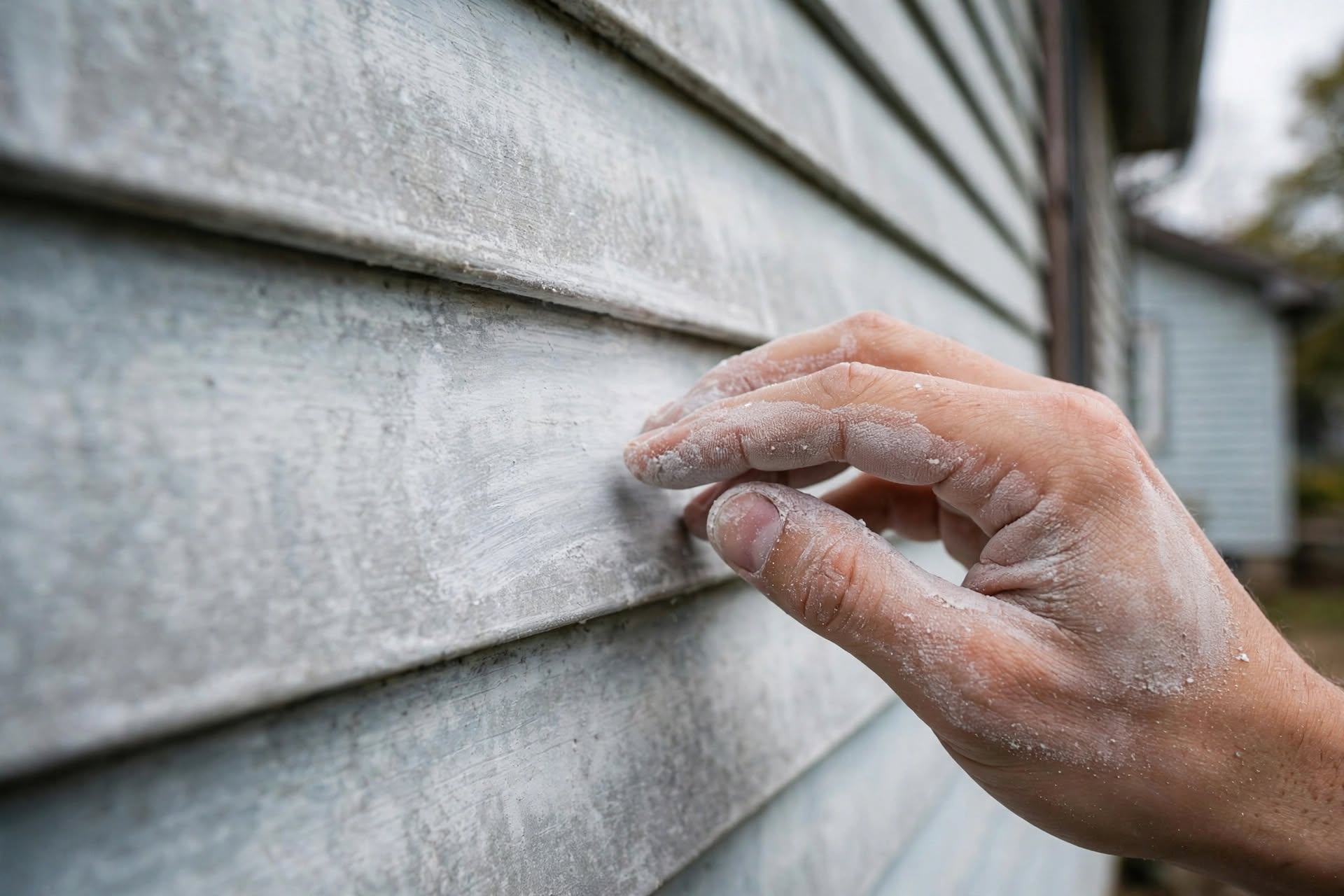
If your vinyl siding has started to look dull, faded, or leaves a chalky white residue on your hand when you rub it, you’re dealing with oxidation. This is one of the most common issues homeowners run into as vinyl siding ages, and a lot of people assume the only fix is a full repaint or even siding replacement. In most cases, that’s not true at all.
Oxidation can usually be removed with the right cleaning process, restoring siding to something close to its original color without the cost or hassle of repainting.
What Causes Vinyl Siding to Oxidize
Vinyl siding is built to hold up outdoors for decades, but constant sun exposure, heat, and weather gradually break down the surface at a chemical level. This breakdown is what causes oxidation, and it shows up as a dull, faded appearance combined with that powdery, chalky texture people notice when they touch the siding.
The Texas sun makes this process happen faster than it might in a milder climate. UV exposure is one of the biggest contributors to oxidation, and siding facing south or west, where it gets the most direct sunlight throughout the day, tends to show oxidation earlier and more noticeably than siding on shaded sides of a house.
The Chalky Residue Explained
That white, powdery film left on your hand after touching oxidized siding comes from the breakdown of the vinyl’s surface coating. As the outer layer degrades, tiny particles rise to the surface, creating the chalky texture that’s become the clearest sign homeowners look for when trying to identify oxidation.
Why Oxidation Makes Siding Look Older Than It Is
Oxidized siding often gets mistaken for siding that simply needs to be replaced, but the underlying material is usually still structurally sound. The problem is mostly cosmetic, caused by that surface layer breaking down and dulling the original color underneath.
This matters because a lot of homeowners spend money on premature siding replacement when a proper cleaning could have restored the appearance for a fraction of the cost.
Fading Versus True Oxidation
Fading and oxidation often show up together, but they’re not exactly the same thing. Fading refers to the color itself losing intensity from UV exposure, while oxidation refers specifically to that chalky surface breakdown. Siding can fade without heavy oxidation, and it can oxidize without dramatic color loss, though in most cases affected by years of Texas sun, homeowners deal with a combination of both.
Why Regular Cleaning Doesn’t Remove Oxidation
A garden hose or basic soap and water wash can remove dirt and grime sitting on top of siding, but oxidation is different because it’s part of the surface breakdown itself, not just dirt collecting on the panel. This is why siding that gets cleaned with regular methods can still look dull and chalky even right after a wash.
Why Pressure Alone Isn’t the Answer Either
High pressure water without the right cleaning solution can sometimes make oxidation look temporarily better by knocking loose surface particles, but it doesn’t address the underlying breakdown, and the chalky appearance typically returns within a short time. In some cases, pressure alone can also force water behind siding panels if used incorrectly, creating a separate problem entirely.
How to Properly Remove Oxidation From Vinyl Siding
Restoring oxidized siding takes a specific cleaning approach designed to address the breakdown at the surface level, rather than just rinsing away loose dirt.
Specialized Cleaning Solutions
Cleaning solutions formulated to break down oxidized material work differently than standard all purpose cleaners, targeting the degraded surface layer directly. These solutions need time to work into the siding before rinsing, since the goal is to lift away the chalky residue and reveal the more intact color underneath.
Soft Washing to Protect the Siding
Soft washing, using lower pressure combined with the right cleaning solution, removes oxidation without risking damage to the siding panels themselves. This method avoids the risk of forcing water behind panels or cracking older, more brittle siding, which can happen with straight high pressure cleaning.
Rinsing Thoroughly to Finish
Once the oxidation cleaning solution has had time to work, a thorough rinse clears away the loosened residue and reveals the restored color underneath. Skipping this step or rushing through it can leave behind a hazy film that makes the siding look only partially cleaned.
What to Expect After Oxidation Removal
Most homeowners see a noticeable improvement in both color and texture once oxidation has been properly removed, though the results depend somewhat on how far along the breakdown had progressed before cleaning. Siding that’s caught early, before oxidation becomes severe, tends to respond best and can look close to its original color again.
When Repainting or Replacement Actually Makes Sense
Cleaning can’t reverse structural damage, cracking, or siding that’s become brittle and prone to breaking. In those cases, cleaning may improve appearance somewhat, but repainting or replacement becomes the more practical long term solution. For siding that’s simply oxidized without physical damage, cleaning remains the better first step before considering a bigger project.
Keeping Siding Looking Its Best Going Forward
Regular cleaning on a schedule of once or twice a year helps slow down how quickly oxidation builds back up, since it removes surface buildup before it has months to bake in under constant sun exposure. Vinyl siding that gets proper attention on a routine basis tends to hold its color and texture far longer than siding that only gets cleaned once oxidation has already become obvious from the street.