
You can clean a wood deck without a pressure washer using oxygen bleach, a soft nylon brush, and a garden hose. Mix ½ to 1 cup of sodium percarbonate (oxygen bleach powder) per gallon of hot water, let it soak on the boards for up to 30 minutes, scrub with the grain, and rinse. This method lifts gray weathering, mildew, and algae without the splintering and raised grain that high pressure can cause on soft woods like pine and cedar.
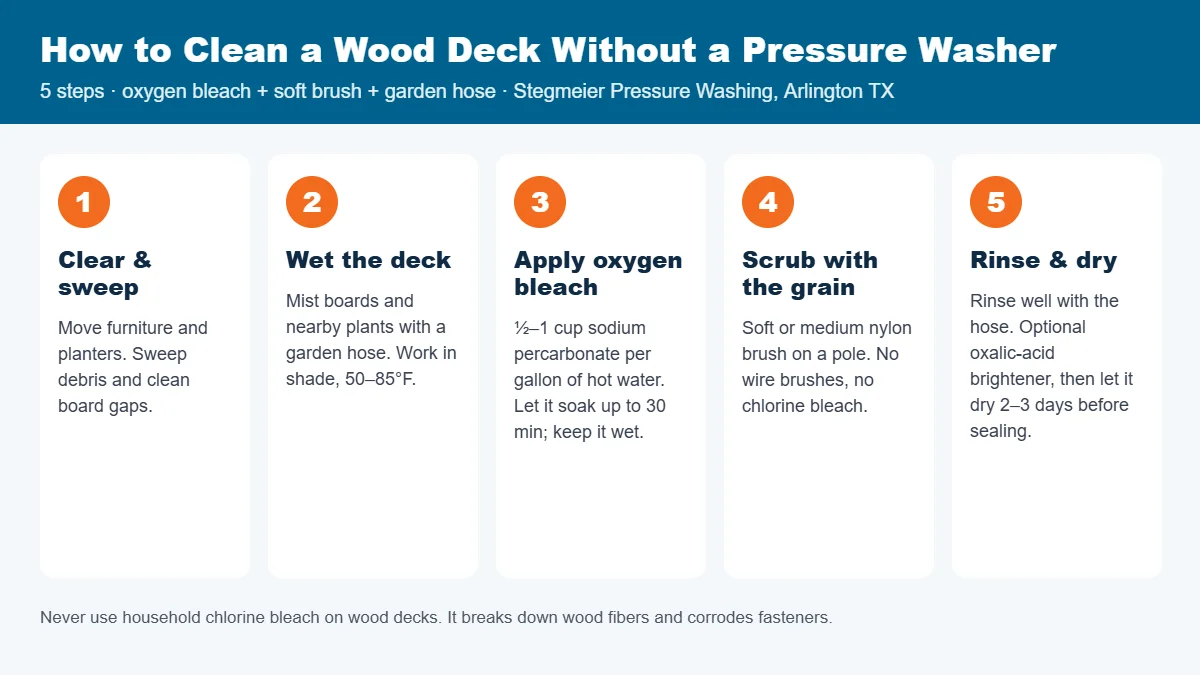
What You Need
- Oxygen bleach powder (sodium percarbonate). It is sold as a deck or laundry booster.
- A bucket of hot water to dissolve the powder.
- A soft or medium nylon deck brush on a pole. Skip wire brushes; they scratch and gouge wood.
- A garden hose with a spray nozzle.
- A pump sprayer or watering can to spread the solution evenly.
- Gloves, safety glasses, and non-slip shoes.
- Optional: a deck brightener with oxalic acid for the final step.
How to Clean a Wood Deck Without a Pressure Washer, Step by Step
1. Clear and Sweep the Deck
Move furniture, grills, rugs, and planters. Sweep off leaves and dirt, then clear the gaps between boards with a putty knife or a narrow brush so water can drain.
2. Wet the Deck and Nearby Plants
Mist the boards with the hose. Wet the plants and grass around the deck too, so any runoff is diluted. Work on a cool, cloudy day or in the shade. Hunker recommends applying percarbonate cleaners only when it is between 50°F and 85°F. In North Texas, that usually means a spring or fall morning.
3. Mix and Apply the Oxygen Bleach
Dissolve ½ to 1 cup of sodium percarbonate per gallon of hot water. Use the stronger mix on heavy mildew or green algae. Spread it over a section of the deck and let it soak for up to 30 minutes, adding more so the wood stays wet. Use the mix within about six hours; it loses strength after that. Test a hidden corner first if the deck has stain or sealer, because the cleaner can strip a worn finish.
4. Scrub With the Grain
Scrub each board along the grain with the nylon brush. Use light pressure on cedar and redwood, which are soft and scuff easily. Focus on shaded corners, the area under planters, and the boards near downspouts, where mildew grows fastest.
5. Rinse, Brighten, and Let It Dry
Rinse each section thoroughly with the hose before it dries. For a deck you plan to stain or seal, apply an oxalic-acid deck brightener after cleaning. It neutralizes the cleaner and returns the wood to its natural color. Rinse again, then let the deck dry for two to three days before applying any finish.
Which Cleaner Should You Use?
| Cleaner | Best for | Mix | Notes |
|---|---|---|---|
| Oxygen bleach (sodium percarbonate) | Mildew, algae, gray weathering | ½–1 cup per gallon of hot water | The go-to choice for wood. Biodegradable once it breaks down. |
| Mild dish soap | Light dirt, pollen, grease from grilling | 1 cup per gallon of warm water | Fine for routine cleaning; it will not kill mildew. |
| White vinegar | Light mildew spots | 1 cup per gallon of warm water | Never use it undiluted. |
| Baking soda paste | Small stains | Thick paste with water | Mildly abrasive; scrub gently. |
| Oxalic-acid deck brightener | After cleaning, before staining | Per the label | Neutralizes the cleaner and restores color. |
| Chlorine bleach | Not recommended | — | Damages wood fibers, corrodes fasteners, and harms plants. |
Why Not Chlorine Bleach?
Household bleach looks like a quick fix, but wood-treatment maker Viance notes that sodium hypochlorite breaks down lignin, the natural glue that holds wood fibers together. It also corrodes metal fasteners, harms nearby plants, and lightens the wood unevenly. Oxygen bleach cleans just as well without those side effects.
When to Call a Professional
Hand scrubbing works well for small and mid-size decks. It gets hard on a large, two-level, or heavily stained deck, or when the old finish is peeling. A professional crew uses low-pressure soft washing with the right cleaner strength for the wood, so the deck gets clean without raised grain or wand marks. In Arlington and the Dallas-Fort Worth area, Stegmeier Pressure Washing cleans decks starting at $0.20 to $0.25 per square foot. Learn more about our deck cleaning service, or see our pressure washing prices.
Frequently Asked Questions
What is the easiest way to clean a wooden deck?
Sweep it, wet it, apply an oxygen bleach solution, let it soak for up to 30 minutes, scrub with a nylon brush, and rinse with a garden hose. No pressure washer is needed.
What is the best way to clean decking without a pressure washer?
Oxygen bleach (sodium percarbonate) mixed at ½ to 1 cup per gallon of hot water is the most effective hand method. It kills mildew and algae and lifts gray weathering without damaging the wood.
Can I clean my wood deck with Dawn dish soap?
Yes, for light dirt and grease. Mix about 1 cup of mild dish soap per gallon of warm water, scrub, and rinse well. Dish soap does not kill mildew or algae, so use oxygen bleach for green or black growth.
When should you not power wash a deck?
Avoid high pressure on soft woods like pine, cedar, and redwood, on older or weathered boards, and on decks with peeling finish. High pressure can splinter the surface, raise the grain, and leave wand marks that show through new stain.
How long should a deck dry before staining?
Let the wood dry for two to three days after cleaning and rinsing, longer after rain or in humid weather.
Sources: Hunker, “How to Clean a Wood Deck With Sodium Percarbonate” (updated June 22, 2022); Viance, “Why You Should Not Use Bleach to Clean Your Deck”; Trex RainEscape, “How to Clean a Wood Deck Without a Pressure Washer”. Deck cleaning prices are Stegmeier Pressure Washing’s published rates as of October 2026.