Skip to content
Concrete driveways face constant exposure to Texas weather, vehicle traffic, and environmental contaminants. Over time, these factors diminish the appearance of your property. Regular maintenance keeps concrete looking fresh and extends its functional life.
Arlington homeowners can maintain attractive driveways with the right approach. This guide provides practical tips for cleaning concrete without causing damage or wasting time.
Start With Regular Maintenance
Frequent light cleaning prevents heavy buildup that requires aggressive treatment. Sweeping or blowing your driveway weekly removes loose dirt and debris. This simple step reduces the amount of material that can stain or embed in the concrete.
Addressing spills immediately stops them from setting into the surface. Oil, transmission fluid, and other automotive fluids soak into concrete quickly. Fresh spills wipe up easily, but old stains require chemical treatment and scrubbing.
Rinsing your driveway monthly with a garden hose removes surface dirt before it accumulates. This quick maintenance takes only a few minutes but makes a noticeable difference. Clean concrete sheds water better and resists new stains more effectively.
Choose the Right Time & Conditions
Temperature affects cleaning product performance and drying time. Arlington’s hot summers can cause cleaners to evaporate before they work. Spring and fall offer moderate temperatures that suit most cleaning tasks.
Avoid cleaning when rain is forecast within 24 hours. Fresh cleaning needs time to dry and set. Rain can wash away cleaning solutions before they complete their work or redeposit dirt onto clean surfaces.
Morning hours provide cooler concrete and lower sun intensity. This gives cleaning products time to work without evaporating too quickly. You also have more energy to complete the job when working in comfortable conditions.
Select Appropriate Cleaning Solutions
Different types of dirt and stains need specific treatments. All-purpose cleaners work for general grime but fail on specialized problems. Matching the product to the stain improves results and reduces effort.
Degreasers break down oil and automotive fluids that penetrate concrete. These products contain surfactants that lift petroleum-based stains from porous surfaces. Apply degreaser, allow dwell time, then rinse thoroughly.
Mold and mildew removers contain biocides that kill organic growth. Standard cleaning does not eliminate mold spores, which can regrow quickly. Products designed for biological contamination prevent regrowth and remove staining.
Rust removers use acidic compounds to dissolve iron oxide stains. These stains often come from metal furniture, tools, or irrigation water. Acid-based cleaners need careful handling and thorough rinsing to prevent concrete damage.
Protect Surrounding Areas
Landscaping near driveways can suffer from cleaning chemicals and high-pressure water. Covering plants with plastic sheeting provides temporary protection. Wetting down vegetation before you start dilutes any chemicals that might contact them.
Your home’s foundation and siding sit close to driveway edges. Directing water and chemicals away from these areas prevents moisture intrusion and staining. Pay attention to spray direction, especially when working near the house.
Vehicles parked nearby need protection from overspray and debris. Moving cars away from the work area prevents accidental damage. Pressure washers can strip paint and break glass if misdirected.
Use Proper Equipment Settings
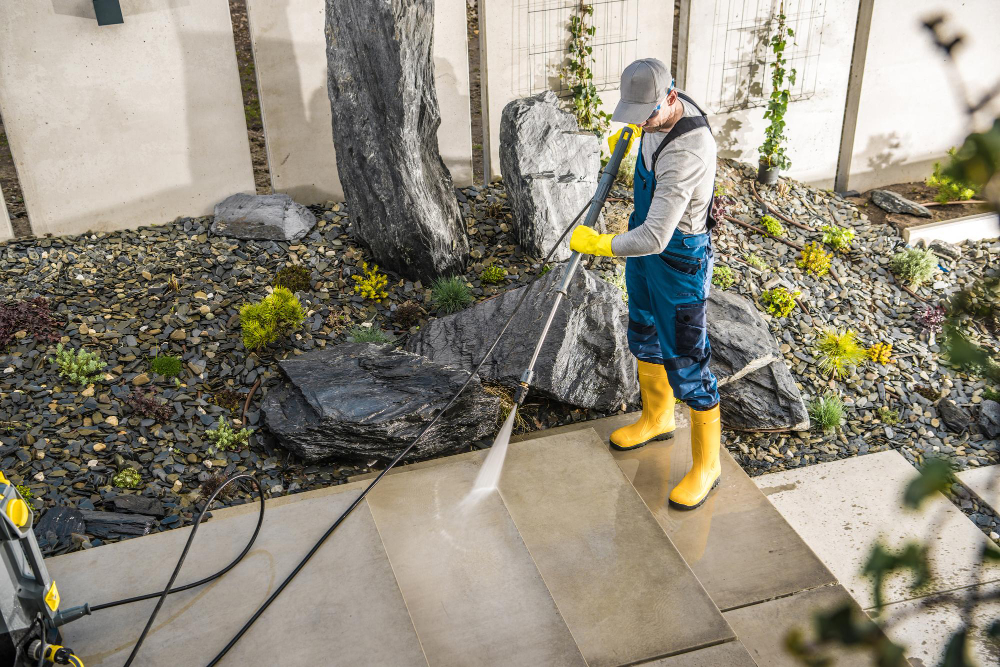
Pressure settings should match the concrete’s age and condition. New concrete tolerates higher pressure than old, weathered surfaces. Start with lower pressure and increase only if needed.
Fan tips distribute water pressure over a wider area than pinpoint nozzles. This broader pattern cleans effectively while reducing the risk of surface damage. A 25-degree or 40-degree tip works well for most driveway cleaning.
Maintaining consistent distance from the surface produces even results. Holding the nozzle too close concentrates pressure and can etch concrete. Six to twelve inches provides good cleaning power without harm.
Work in Sections
Breaking large driveways into smaller sections makes the job manageable. Complete each section fully before moving to the next. This approach ensures thorough coverage and prevents missed spots.
Pre-treat stained areas within each section before general cleaning. Allow treatment products adequate time to work. Rushing through this step reduces their effectiveness and wastes product.
Rinsing each section completely before it dries prevents residue buildup. Cleaning solutions left on concrete attract dirt and can cause discoloration. Fresh rinse water should run clear before you consider a section finished.
Address Stains Systematically
Oil stains require absorbent materials to draw out petroleum products. Cat litter, sawdust, or commercial absorbents soak up fresh spills. Spread the material over the stain, let it sit overnight, then sweep it up before cleaning.
Old oil stains need chemical degreasing before pressure washing. Apply degreaser generously and scrub with a stiff brush. The mechanical action helps the cleaner penetrate and break down the oil.
Tire marks respond to specialized rubber removers or strong degreasers. These black streaks contain rubber particles and road oils. Regular cleaning products often just spread them around instead of removing them.
Rust stains need acid-based treatment and should be handled carefully. Apply rust remover only to affected areas, not the entire driveway. Neutralize and rinse acid products thoroughly to prevent concrete etching.
Pay Attention to Drainage
Water should flow away from your home and garage during cleaning. Adjusting your cleaning direction prevents water intrusion problems. Start at the high end of the driveway and work toward the street or drainage areas.
Pooling water indicates low spots that may need attention. These areas hold moisture and promote mold growth. Noting these locations helps you address drainage issues after cleaning.
Runoff containing oils and cleaning chemicals requires proper disposal. Many communities have regulations about what can enter storm drains. Directing contaminated water to grassy areas allows soil filtration before it reaches waterways.
Finish With Proper Rinsing
Complete rinsing removes all traces of cleaning products and loosened contamination. Going over the entire surface with clear water ensures nothing remains to attract new dirt. This final step determines how long your cleaning efforts last.
Check for soap residue by looking at rinse water color and clarity. Cloudy water indicates a remaining cleaner that needs more rinsing. Continue until water runs completely clear from all areas.
Allow concrete to dry fully before assessing results. Wet concrete looks darker and can hide remaining stains. Waiting 24 hours shows the true outcome of your cleaning efforts.
Consider Sealing After Cleaning
Clean concrete accepts sealers better than dirty surfaces. Sealing creates a protective barrier against stains, moisture, and weather damage. This treatment extends the time between cleaning sessions and makes future maintenance easier.
Concrete must be completely dry before sealer application. Trapped moisture prevents proper sealer bonding and can cause clouding or peeling. Wait at least 48 hours after cleaning before sealing, longer if humidity is high.
Different sealers provide different levels of protection and appearance. Penetrating sealers soak into concrete and protect from within while maintaining a natural look. Topical sealers create a surface film that offers more stain resistance but may alter appearance.
Watch for Damage During Cleaning
Cracks, spalling, and other concrete damage often become visible during cleaning. Document these issues for later repair. Taking photos helps you remember locations and severity of problems.
Surface scaling indicates concrete deterioration that cleaning will not fix. This flaking occurs when water enters the concrete and freezes, breaking off surface layers. Repair products can restore these areas but need dry conditions.
Efflorescence appears as white, powdery deposits on concrete surfaces. This mineral buildup comes from water moving through the concrete and evaporating. While cleaning can remove visible deposits, addressing moisture sources prevents recurrence.
Maintain Equipment
Clean equipment performs better and lasts longer. Flushing pressure washer systems after each use removes chemical residues and prevents corrosion. Run clean water through the system for several minutes until all traces of cleaner are gone.
Check nozzles for wear and clogs regularly. Damaged or clogged tips produce uneven spray patterns that reduce cleaning effectiveness. Replace worn nozzles to maintain consistent results.
Store equipment properly between uses. Pressure washers should be drained of water if not being used for extended periods. This prevents freezing damage in winter and reduces mineral buildup in components.
Know When to Call Professionals
Some staining and damage exceed what typical cleaning can address. Deep-set stains, extensive oil contamination, or widespread mold growth may need commercial-grade products and equipment. Recognizing these situations saves time and frustration.
Large driveways require significant time and physical effort to clean thoroughly. The job can take all day or longer depending on condition and size. Professional services complete the work faster with better equipment.
Improper technique or equipment use can damage concrete beyond repair. If you lack experience or confidence, getting professional help protects your investment. The cost of correction exceeds the cost of doing it right initially.
Maintaining concrete driveways preserves your property’s appearance and value. Regular attention prevents small problems from becoming major issues. Following these tips keeps your Arlington home looking its best while protecting your concrete investment for years to come.