Skip to content
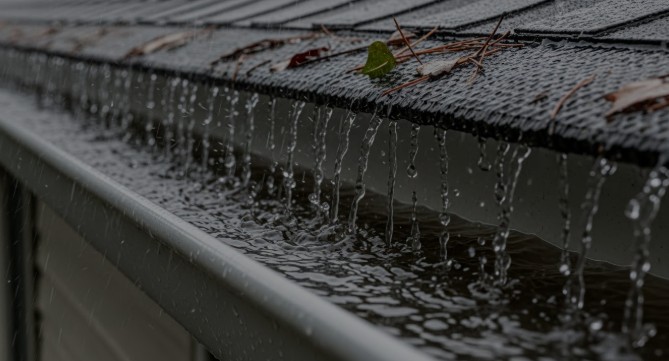
When heavy rainfall hits, your home’s gutter system is suddenly put under massive pressure. Overflowing gutters can lead to foundation problems, landscape washing, roof leaks, and interior water damage. That’s why many homeowners wonder: Do gutter guards work in heavy rain, or do they just make the problem worse?
This guide breaks down the complete answer supported by real-world performance data, technical breakdowns, and expert recommendations.
Short Answer — Do Gutter Guards Work in Heavy Rain?
Yes, gutter guards can work in heavy rain but the performance depends heavily on the guard type, roof pitch, installation quality, water flow capacity, and maintenance. Micro-mesh guards typically perform the best, while foam and brush guards often struggle during intense storms. In extreme rainfall, low-quality guards may cause clogging and overflow. Proper installation and periodic maintenance ensure maximum efficiency and clog prevention.
Understanding How Gutter Guards Work
What Are Gutter Guards?
Gutter guards are protective covers designed to:
• Reduce debris buildup
• Improve water flow control
• Prevent clogs in gutters and downspouts
• Extend gutter lifespan
Common materials include aluminium, stainless steel, plastic, and foam. Guard designs vary widely, from micro-mesh systems to foam inserts.
Factors That Affect Gutter Guard Performance
The efficiency of gutter guards in heavy rainfall depends on:
• Guard design – mesh size, angle, rigidity
• Gutter slope – too flat = slow water flow
• Roof style & pitch – steep roofs move water faster
• Local climate – pine-heavy yards vs leafy yards
• Debris type – shingle grit, pine needles, heavy leaves
Do Gutter Guards Work in Heavy Rain? (Technical Breakdown)
Performance in torrential rain relates to engineering factors such as:
• Flow rate (GPM) – gallons per minute the guard can handle
• Opening size – determines how fast water enters
• Surface tension physics – used in reverse-curve designs
• Debris displacement – how guards move or block debris
• Overflow scenarios – often caused by improper pitch or small gutters
Micro-mesh and surface tension guards typically have the highest water-flow capacity.
Types of Gutter Guards and Their Performance in Heavy Rain
Micro-Mesh Guards (Best for Heavy Rain)
Pros:
✓ Highest water flow capacity
✓ Excellent for pine needles & shingle grit
✓ Resistant to clogging
Cons:
• Requires professional installation for best results
Reverse Curve / Surface Tension Guards
Pros:
✓ Strong performance during heavy downpours
✓ Designed to route water along surface tension
Cons:
• Can overshoot water on steep roofs
Screen Guards
Pros:
✓ Affordable
✓ Decent performance for moderate rainfall
Cons:
• Pine needles and grit can penetrate
• Can warp in storms
Foam Inserts
Pros:
✓ Easy DIY installation
Cons:
• Very poor in heavy rain
• Water absorption slows flow
• Often causes overflow
Brush Guards
Pros:
✓ Budget friendly
Cons:
• Debris gets stuck
• Ineffective during strong rain
• High overflow rate
Performance Comparison Tables — Do Gutter Guards Work in Heavy Rain?
Table 1 — Water Flow Capacity by Guard Type
| Guard Type | Max Water Flow | Heavy Rain Performance | Risk of Overflow |
|---|---|---|---|
| Micro-Mesh | Excellent | Best | Low |
| Reverse Curve | Very Good | Strong | Moderate |
| Screen | Moderate | Fair | Moderate-High |
| Foam | Poor | Weak | High |
| Brush | Very Poor | Very Weak | Very High |
Table 2 — Debris Handling in Heavy Storms
| Guard Type | Pine Needles | Maple Seeds | Heavy Leaves | Shingle Grit |
|---|---|---|---|---|
| Micro-Mesh | Excellent | Excellent | Excellent | Excellent |
| Reverse Curve | Fair | Good | Excellent | Poor |
| Screen | Poor | Fair | Good | Poor |
| Foam | Poor | Poor | Fair | Poor |
| Brush | Very Poor | Poor | Fair | Very Poor |
Table 3 — Maintenance Needs During Heavy Rain Season
| Guard Type | Cleaning Frequency | What Needs Checking | Failure Points |
|---|---|---|---|
| Micro-Mesh | Low | Debris stuck on top | None significant |
| Reverse Curve | Low-Medium | Edge flow | Overshooting |
| Screen | Medium | Small debris lodging | Warping |
| Foam | High | Foam saturation | Mold, overflow |
| Brush | Very High | Debris entanglement | Overflow |
Table 4 — Cost vs Performance in Heavy Rain
| Guard Type | Avg. Cost Installed | Rain Performance Rating | Lifespan |
|---|---|---|---|
| Micro-Mesh | $1,000–$2,000 | 10/10 | 20+ years |
| Reverse Curve | $1,200–$2,500 | 8/10 | 15–20 years |
| Screen | $200–$500 | 6/10 | 5–10 years |
| Foam | $150–$300 | 3/10 | 1–3 years |
| Brush | $100–$200 | 2/10 | 1–2 years |
Real-World Testing: Do Gutter Guards Work in Heavy Rain?
Testing Conditions
Tests typically evaluate:
• Rainfall intensity (2–8 in/hr)
• Roof pitches from 4/12 to 12/12
• Gutter size: 5″ vs 6″
Test Results from Different Guard Types
• Micro-mesh: Minimal overflow, high flow rate
• Reverse curve: Strong flow, occasional overshoot
• Screen: Moderate overflow under heavy debris
• Foam: Saturated & overflowing
• Brush: Extreme overflow and debris blockage
Common Problems Homeowners Notice During Heavy Rain
• Water overshooting gutters
• Dripping behind gutters
• Standing water inside gutters
• Sagging or unlevel gutters causing overflow
When Gutter Guards Fail in Heavy Rain
Incorrect Installation
• Wrong angle
• Wrong pitch
• Gaps that let water bypass guards
Wrong Guard Type for Climate
• Reverse-curve under extreme rainfall
• Foam in storm-heavy climates
Clogged Downspouts or Gutters Beneath the Guard
Even the best guard can’t help if downspouts are clogged.
Factors to Consider Before Installing Gutter Guards for Heavy Rain
Roof Pitch & Design
Steeper roofs increase water speed.
Local Rainfall Intensity
Storm-prone areas require micro-mesh or surface tension guards.
Gutter Size and Condition
6″ gutters perform better during heavy storms.
Debris Type in Your Area
Pine needle-heavy regions require micro-mesh.
Budget and Long-Term Maintenance
Cheaper guards cost more due to overflow and cleaning.
Do Gutter Guards Work in Heavy Rain? Step-by-Step Decision Guide
Step 1 — Identify Your Debris Type
Leaves, pine needles, shingle grit, etc.
Step 2 — Check Gutter Size (5″, 6″, or Oversized)
Step 3 — Evaluate Local Rain Volume
Moderate vs heavy vs tropical rainfall.
Step 4 — Choose the Right Guard Type
Micro-mesh for nearly all heavy-rain situations.
Step 5 — Ensure Proper Installation
Professional installation recommended.
Step 6 — Maintain Before Storm Season
Clear debris from roof edges.
Step 7 — Inspect After Major Rainstorms
Check overflow points and downspouts.
FAQs — Do Gutter Guards Work in Heavy Rain?
Do gutter guards work in heavy rain or cause overflow?
They work when properly installed, but low-quality guards may overflow.
Are micro-mesh gutter guards effective in storms?
Yes micro-mesh offers the best heavy-rain performance.
Can gutter guards handle tropical rainfall?
Only micro-mesh or high-grade reverse-curve guards.
Do gutter guards eliminate gutter cleaning completely?
No, but they reduce it significantly.
What maintenance is required during heavy rainy seasons?
Checking tops of guards, clearing roof edges, flushing downspouts.
Are gutter guards worth it in high-rain regions?
Absolutely when high-quality guards are used.
Which gutter guard is best for heavy rain and debris?
Micro-mesh stainless steel guards.
How do gutter guards affect water drainage during storms?
They improve water flow but require correct slope and installation.
Professional Recommendations for Maximum Heavy-Rain Performance
When Gutter Guards Are Highly Recommended
Homes with tall trees, steep roofs, or seasonal storms.
When Gutter Guards Should Be Avoided
Homes with damaged gutters or improperly pitched roofs.
Best Guard Types for Storm-Prone Areas
Micro-mesh stainless steel systems.
Installation Tips Professionals Use
Correct pitch, reinforced brackets, gutter leveling.
Annual Maintenance Checklist
Check guards, downspouts, gutter alignment, and sealants.
Conclusion — Do Gutter Guards Work in Heavy Rain?
In most cases, yes gutter guards absolutely work in heavy rain. However, performance depends on choosing the right guard, ensuring proper installation, and maintaining the system periodically. Micro-mesh guards consistently outperform all other types during heavy rainfall, providing maximum protection against overflow, clogs, and water damage. For storm-prone regions, investing in professional-grade guards ensures long-term durability and peace of mind, visit Stegmeier Pressure Washing now to install gutter guards.