Skip to content
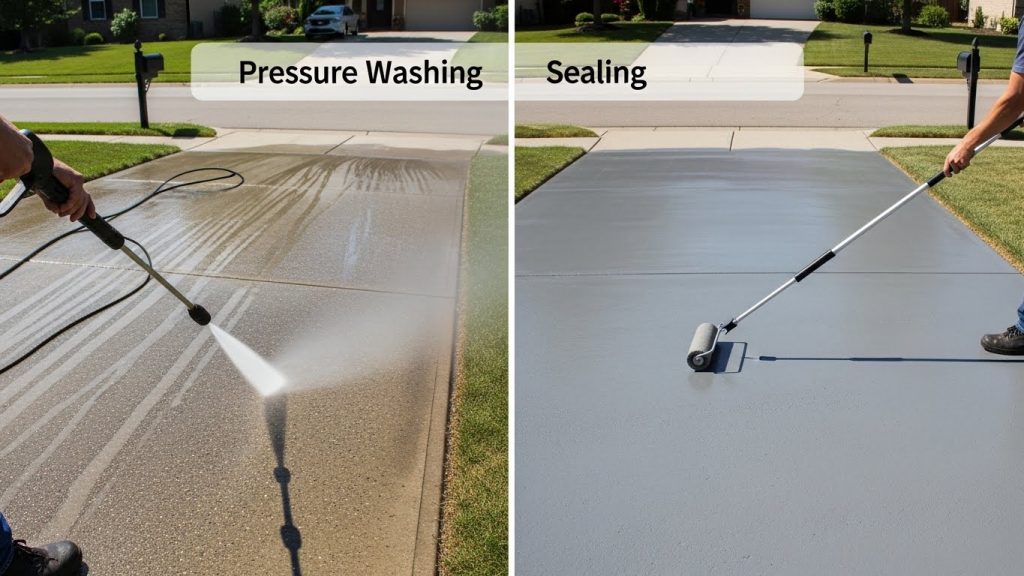
Keeping your concrete driveway looking clean, strong, and protected requires more than just an occasional wash. Many homeowners wonder “Should I seal my concrete driveway after pressure washing?” especially after seeing how fresh the surface looks. The truth is: pressure washing exposes the pores of the concrete, making sealing especially important afterward. Below is a fully comprehensive guide that answers every part of this question with clarity, precision, and expert-backed detail.
Short Answer: Should I Seal My Concrete Driveway After Pressure Washing?
Yes, you should seal your concrete driveway after pressure washing, but only after the surface has fully dried. Sealing helps protect the freshly opened pores from moisture, stains, chemicals, and weather-related damage.
Quick Breakdown
- Ideal time to seal: 24–48 hours after pressure washing
- Why seal: Protects against stains, cracking, and moisture intrusion
- What happens if you don’t seal: Faster wear, discoloration, and premature aging
- Expert recommendation: Seal every 2–3 years depending on sealer type and climate
Understanding Why Sealing Matters After Pressure Washing
Pressure washing does more than remove dirt — it opens up the pores of the concrete. When those pores remain unsealed:
- Water easily penetrates, leading to internal deterioration.
- Oil, grease, and tire marks embed deeper and become harder to remove.
- Freeze–thaw cycles can cause cracking, scaling, or surface flaking.
- UV exposure accelerates fading and surface breakdown.
Sealing acts as a protective barrier, extending the lifespan of your driveway while keeping it looking clean and polished.
Should I Seal My Concrete Driveway After Pressure Washing? (Deep Explanation)
The decision to seal your driveway after pressure washing depends on its condition and your environment. Here’s a deeper look:
When Sealing Is Recommended
- You live in an area with freeze–thaw cycles
- Your driveway gets heavy vehicle traffic
- You want long-term protection against oil, salt, and stains
- The driveway looks dull, faded, or porous
- It’s been 2+ years since the last sealing
When Sealing Is NOT Recommended
- The concrete is freshly poured (you must wait at least 30 days)
- The surface is still damp after pressure washing
- There are structural cracks that need repair first
- There is efflorescence that hasn’t been removed
Environmental Considerations
- Sunny areas: Acrylic sealers help enhance appearance
- Cold climates: Penetrating sealers resist freeze–thaw damage
- High-traffic areas: Epoxy or urethane sealers offer longer durability
How Long Should You Wait to Seal After Pressure Washing?
Concrete must be fully dry before sealing.
- Typical drying time: 24–48 hours
- High humidity: May require up to 72 hours
- Very hot climates: Drying may be faster
How to Test Moisture Levels
Tape a piece of plastic to the surface for 1 hour.
If condensation forms under it — wait longer before sealing.
Ideal Weather Conditions
- Temperature: 50°F–90°F
- No rain for 24 hours after sealing
- Avoid windy days that cause uneven drying
Benefits of Sealing a Concrete Driveway After Pressure Washing
Sealing offers multiple long-term advantages:
- Protection from stains: Oil, grease, fertilizer, mud
- Moisture resistance: Prevents water penetration
- Improved durability: Reduces cracking and surface erosion
- Enhanced appearance: Richer color and cleaner finish
- Lower maintenance: Easier to wash, fewer deep cleans needed
Common Mistakes Homeowners Make After Pressure Washing
Avoid these mistakes to ensure a perfect sealing job:
Applying too thick of a coat, which prevents proper curing
Sealing too early while the driveway is still damp
Using the wrong type of sealer for climate or surface
Skipping efflorescence removal, leading to peeling
Uneven application, causing blotches or streaks
People Also Ask (Related Sub-Questions)
Should I seal my concrete driveway every year?
No, most driveways only need sealing every 2–3 years depending on the sealer type.
Is sealing necessary if my driveway is newly pressure washed?
Yes. Pressure washing exposes the pores, making sealing even more important.
Can you seal a concrete driveway when it’s still damp?
No. Trapped moisture leads to sealer failure and blotchy results.
What happens if you don’t seal a concrete driveway?
It becomes more vulnerable to stains, erosion, cracking, and weather damage.
Do pressure washers damage concrete before sealing?
Excessive PSI can. Use 3000 PSI or less and keep the nozzle moving.
Is sealing worth it for old or faded driveways?
Absolutely, sealing restores appearance and protects the surface.
Types of Concrete Sealers & Which One Works Best After Pressure Washing
1. Penetrating Sealers (Silane/Siloxane)
- Best for wet or freezing climates
- Invisible finish
- Excellent water and salt resistance
2. Acrylic Sealers
- Great for decorative or colored concrete
- Adds gloss or semi-gloss
- Most common for residential driveways
3. Epoxy/Urethane Sealers
- Highest durability
- Best for heavy traffic areas
- Offers a high-gloss finish
Choosing the Right Sealer
- Cold climates: Penetrating
- High appearance priority: Acrylic
- Heavy vehicles: Epoxy/urethane
How to Prepare Concrete for Sealing After Pressure Washing
- Inspect for cracks and repair before sealing
- Remove stains that pressure washing didn’t fully clear
- Eliminate efflorescence (white powder deposits)
- Confirm the driveway is bone dry
- Conduct surface profiling if the manufacturer recommends it
Step-by-Step Guide: How to Seal a Concrete Driveway After Pressure Washing
- Inspect and clean the surface
Look for cracks, stains, and residues that need attention. - Allow proper drying time
Ensure at least 24–48 hours of drying. - Select the correct sealer
Choose penetrating, acrylic, or epoxy based on climate and traffic. - Mask edges and landscaping
Protect grass, walls, garage doors, and walkways. - Apply the first coat
Use a sprayer for even distribution or a roller for precision. - Allow curing time
Most sealers require 2–4 hours before a second coat. - Apply the second coat (if needed)
Thin, even coats ensure best coverage. - Final curing & wait time
- Foot traffic: 4–6 hours
- Cars: 24–48 hours
Comparison Table: Sealing Options After Pressure Washing
| Sealer Type | Best For | Finish | Durability | Cost | Pros | Cons |
|---|---|---|---|---|---|---|
| Penetrating | Freeze–thaw climates | Invisible | High | $$ | Long-lasting, no gloss | Not decorative |
| Acrylic | Aesthetic enhancement | Gloss/Semi-gloss | Medium | $ | Improves appearance | Needs reapplication sooner |
| Epoxy/Urethane | Heavy vehicle traffic | High-gloss | Very High | $$$ | Extremely durable | Slippery when wet, higher cost |
How Much Does It Cost to Seal a Concrete Driveway After Pressure Washing?
DIY Costs
- Sealer: $25–$50 per gallon
- Tools (roller/sprayer): $20–$100
- Total DIY cost: $0.15–$0.30 per sq. ft.
Professional Sealing Costs
- Average: $0.75–$2.50 per sq. ft.
- Includes cleaning, materials, and labor
Recoat Frequency
- Acrylic: Every 2 years
- Penetrating: Every 3–5 years
- Epoxy: Every 5–10 years
Maintenance Tips After Sealing Your Concrete Driveway
- Rinse regularly to prevent buildup
- Avoid harsh chemicals that degrade the sealer
- Use plastic snow shovels to avoid scratching
- Reapply sealer on schedule based on type
- Prevent tire marks by avoiding tight turns for the first week
- Seasonal checks for cracks or damage
FAQs
1. How long should I stay off the driveway after sealing?
Typically 24–48 hours for vehicles.
2. What temperature is best for sealing concrete?
Between 50°F and 90°F.
3. How often should a sealed driveway be pressure washed?
Once or twice per year.
4. Will sealing change the color of my driveway?
Acrylic and epoxy can enhance color; penetrating sealers will not.
5. Can I seal stamped or decorative concrete the same way?
Yes, acrylic sealers are best for decorative surfaces.
6. Does sealing prevent oil and rust stains?
It doesn’t prevent them entirely, but makes them much easier to remove.
7. What if it rains after I seal my concrete driveway?
Rain within 4 hours can cause streaking; you may need to reapply.
8. Can I use the same sealer I used last time?
Yes, as long as the old sealer is compatible and still adhered properly.
Conclusion
Sealing your driveway after pressure washing is one of the best ways to protect your investment. It locks out moisture, guards against stains, enhances appearance, and significantly extends the lifespan of the concrete. By allowing proper drying time, choosing the correct sealer, and applying it with care, you ensure long-lasting results that keep your driveway looking exceptional year-round. For more information and help regarding pressure washing visit Stegmeier Pressure Washing now.