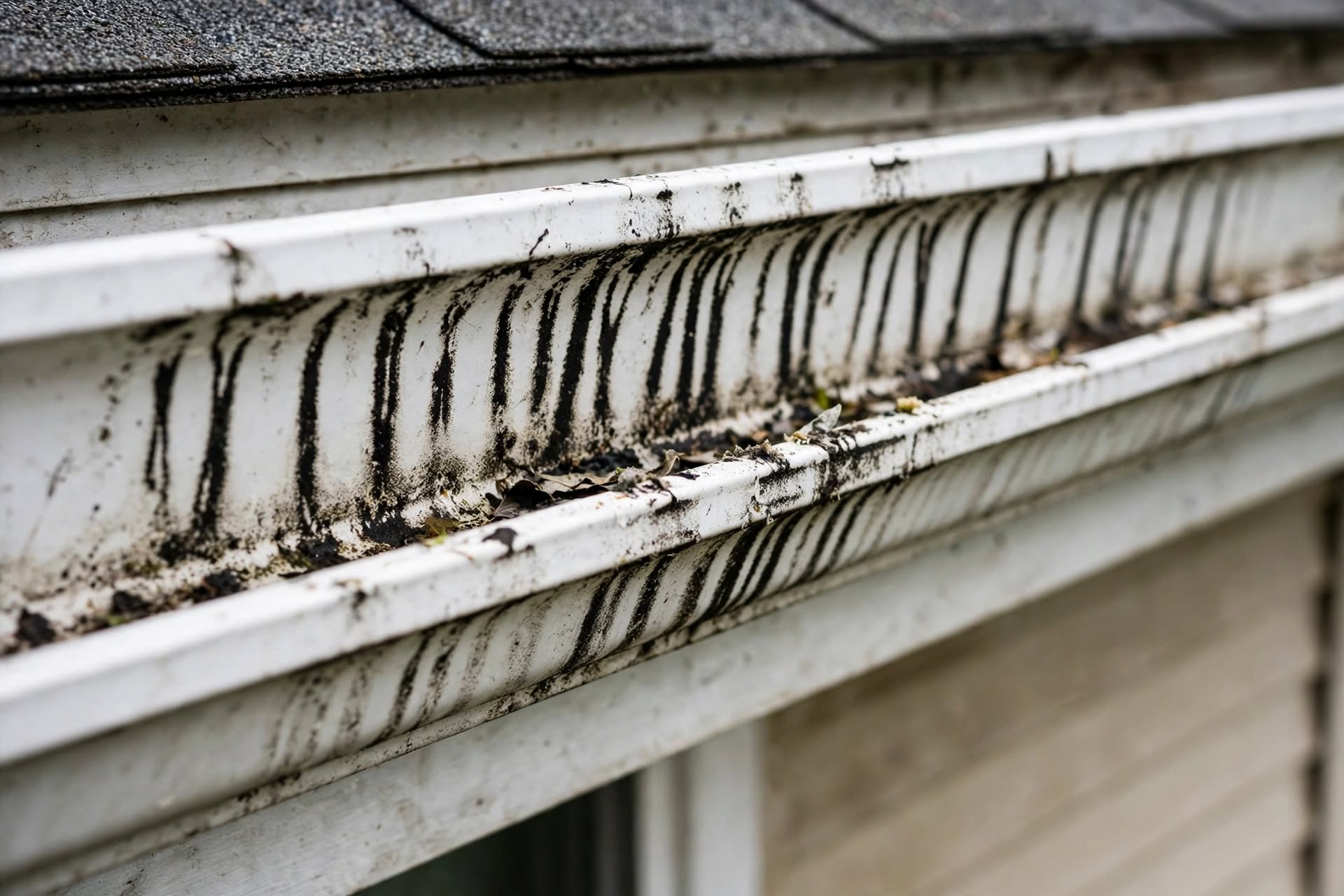
If you’ve looked up at your gutters and noticed dark vertical streaks running down the front edge, you’re dealing with what most people in the industry call tiger stripes. They show up on homes all over Arlington, and once they start, they tend to spread across the whole gutter line if nothing gets done about them.
Tiger stripes are one of the most common exterior issues homeowners deal with, and they’re also one of the more misunderstood ones. A lot of people assume it’s dirt or mold, but the real cause is usually something different.
What Tiger Stripes Actually Are
Tiger stripes are the dark, uneven streaks that form on the front lip of gutters, usually running down in a pattern that looks a bit like stripes, which is where the name comes from. They form when dirt, oils, and airborne pollutants collect on the gutter’s edge and get baked on by sun exposure over weeks and months.
Rain plays a role too. Water flows over the edge of the gutter during storms, carrying dirt and debris with it, and as that water dries, it leaves behind a thin layer of residue. Each time this happens, another layer builds on top of the last one, and the stripes get darker and more noticeable over time.
Why the Front Edge Gets Hit the Hardest
The front lip of a gutter sits directly in the path of runoff every time it rains. Dirt from the roof, pollen, and general airborne debris wash down and collect right at that edge, and because the metal there heats up in direct sun, the residue bonds to the surface instead of washing away on its own.
This is why tiger stripes almost always show up on the front face of the gutter rather than the sides or the underside, which don’t see the same combination of water flow and sun exposure.
What Causes the Buildup to Get Worse
A few conditions make tiger stripes form faster and stick around longer.
Roof Runoff & Shingle Wear
As asphalt shingles age, they shed small amounts of granules and oils, especially during heavy rain. That runoff carries those particles straight down into the gutter, and it’s one of the main contributors to the dark residue that builds into tiger stripes over time.
Pollen & Dust in North Texas
Spring pollen season in North Texas leaves a fine yellow and green coating on just about every outdoor surface, and gutters are no exception. Combined with regular dust and airborne dirt throughout the year, this creates a steady supply of material that ends up baked onto the gutter’s edge.
Direct Sun Exposure
Gutters facing south or west tend to develop tiger stripes faster, since they get more direct sun throughout the day. That heat speeds up the process of dirt and residue bonding to the metal surface, making the stripes darker and harder to remove the longer they sit.
Why Tiger Stripes Are Hard to Remove With Regular Cleaning
A garden hose or a quick wipe down usually does nothing for tiger stripes, since the residue has already bonded to the metal surface rather than just sitting on top of it. Regular soap and water can lighten the appearance slightly, but it rarely removes the staining completely once it’s had time to set.
This is part of why tiger stripes tend to get worse year after year if they’re never properly addressed. Each new layer builds on the last, and eventually the buildup becomes tough enough that basic cleaning tools have no real effect.
Why Pressure Alone Doesn’t Always Work
High pressure water can knock loose surface dirt, but on set in residue, straight pressure often isn’t enough to break the bond between the stains and the metal. Without the right cleaning solution working alongside the pressure, tiger stripes can look slightly better after a rinse but return to their original appearance within a few weeks.
How to Properly Remove Tiger Stripes
Removing tiger stripes effectively usually takes a specific process rather than a single quick fix.
Applying a Cleaning Solution First
A cleaning solution designed to break down oxidized residue and baked on dirt needs time to work into the buildup before rinsing. This step softens the bond between the stains and the gutter surface, which makes the next step far more effective than jumping straight to rinsing alone.
Rinsing With Controlled Pressure
Once the solution has had time to work, a controlled rinse lifts the loosened residue away from the gutter without damaging the metal or the paint finish underneath. This combination of solution and rinse is what actually removes tiger stripes, rather than just dulling their appearance temporarily.
Treating the Whole Gutter Line, Not Just Visible Spots
Tiger stripes often start in a few spots before spreading, so treating the entire gutter line, not just the darkest areas, helps prevent the stains from reappearing in new spots shortly after cleaning.
Keeping Tiger Stripes From Coming Back
A few habits can slow down how fast tiger stripes return after a cleaning.
Keeping gutters clear of debris reduces the amount of organic material sitting in the runoff path Trimming back trees near the roofline cuts down on leaf litter and sap that contribute to buildup Scheduling regular gutter cleanings prevents residue from having months to bake onto the surface Addressing roof algae or shingle wear early reduces the amount of material washing down into the gutters
Getting Ahead of the Problem
Tiger stripes are a common issue, but they don’t have to be a permanent one. Once the buildup is properly removed with the right combination of cleaning solution and rinse, keeping up with regular gutter maintenance goes a long way toward preventing the stripes from building back up season after season. A clean, even gutter line makes a real difference in how the whole front of a home looks from the street.