Concrete driveways in the Arlington area take a lot of abuse. Baking under the Texas sun for months at a time, soaking up rain, absorbing oil and grease from vehicles, and handling years of traffic all wear on the surface in ways that aren’t always obvious until significant damage has already occurred.
Professional pressure washing removes the buildup that accumulates on concrete over time. But cleaning alone doesn’t protect the surface going forward. Sealing the driveway after a professional wash is the step that actually extends the life of the concrete and keeps it looking clean longer between service visits.
Here’s why that combination matters.
What Pressure Washing Does for Concrete
Concrete is porous at a microscopic level. Over time, oil from vehicles, biological material from algae and mildew, and embedded dirt from traffic all work their way into those pores. Surface rinsing with a garden hose moves loose material around but doesn’t reach into the concrete itself.
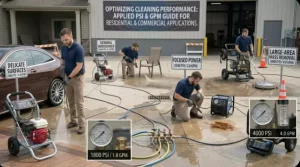
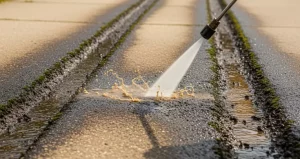
Professional pressure washing uses high-pressure water, typically delivered through a surface cleaner attachment that spreads the pressure evenly across flat concrete, to pull embedded material out of the surface. The result is concrete that is clean not just on top but through the surface layer where staining and organic growth actually live.
After a professional wash, the concrete is also open. The pores that held years of grime are now clean and empty, which means the surface is in the best possible condition to accept a sealant. Trying to seal dirty concrete traps contaminants under the sealant, which undermines its adhesion and shortens how long it lasts.
What Concrete Sealant Actually Does
A concrete sealant fills those surface pores with a protective barrier that slows down the re-entry of oil, water, biological material, and other contaminants. Depending on the type of sealant used, it either penetrates into the concrete and bonds with the material internally, or it forms a film on top of the surface that acts as a physical barrier.
Penetrating sealants, which are common for driveways, work below the surface without changing the appearance of the concrete. They don’t leave a glossy or plastic-looking finish. The concrete looks essentially the same, but the pores are protected against water infiltration and staining.
Film-forming sealants sit on top of the concrete and are more visible. They can add a slight sheen and are more common on decorative concrete like stamped patios. For standard gray driveways, penetrating sealants are generally the more practical choice.
Protection Against Oil & Grease Staining
Oil stains are one of the harder problems to deal with on driveways. Fresh oil can be treated with cleaning agents and removed with pressure washing. Oil that has been soaking into unsealed concrete for months or years becomes much harder to lift fully.
A sealed concrete surface doesn’t absorb oil the same way. Spills bead up on the surface rather than soaking in, which means they can be cleaned up before they become permanent stains. For homeowners who park vehicles that drip oil or other fluids, sealing is one of the most practical protective steps available.
How Texas Weather Accelerates Concrete Deterioration
Arlington’s climate is hard on concrete in a few specific ways. The freeze-thaw cycle that damages concrete in northern states is less of a factor here, but the intense sun and heat create their own set of problems.
UV exposure breaks down concrete over time, causing surface chalking and eventually contributing to surface erosion. Water infiltration during heavy rain events, which are common in North Texas, carries material into the concrete and can cause issues with the base layer over time.
Sealing reduces the amount of water that penetrates the concrete surface, which matters for driveway longevity. Water that can’t get into the surface also can’t carry contaminants in, which is why sealed driveways tend to stay cleaner for longer periods after washing.
The Right Timing for Sealing After a Wash
Concrete needs to be dry before sealant is applied. After a professional pressure wash, the surface should be allowed to dry completely, which typically takes 24 to 48 hours depending on weather conditions and sun exposure. Applying sealant to concrete that still holds moisture traps that moisture under the barrier, which can cause issues with adhesion and surface appearance over time.
Warm, dry weather is the preferred condition for sealing. In Arlington, late spring or early fall usually offers the best combination of temperatures and low humidity for the product to cure properly. Sealing in the middle of summer when temperatures are at their peak can cause some sealant products to cure too quickly, which affects coverage and finish.
How Often Driveways Need to Be Cleaned & Sealed
For most residential driveways in Arlington, pressure washing once a year and resealing every two to three years is a general maintenance schedule that keeps the surface in good condition. High-traffic driveways or those with vehicles that leak fluids regularly may benefit from more frequent attention.
Sealant wears down over time from traffic and UV exposure. When a sealed driveway starts showing signs that water is no longer beading on the surface, that’s a reliable indicator that the sealant has worn and it’s time to reapply.
Getting the Most Out of the Investment
A concrete driveway installed at current material and labor costs is a significant investment. Pressure washing and sealing that surface on a regular schedule is one of the lower-cost maintenance steps available to protect it. Keeping contaminants out of the concrete, preventing oil staining, and reducing water infiltration all slow down the deterioration process in ways that add years to the life of the driveway before resurfacing or replacement becomes necessary.