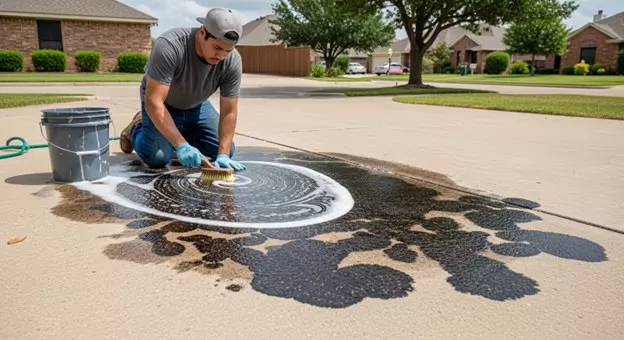
Oil stains are one of the most stubborn problems on concrete driveways — and one of the most common. Every vehicle that parks regularly on your driveway will eventually leave behind small drips of motor oil, transmission fluid, or brake fluid that soak into the porous surface. Over time, those small drips turn into dark, spreading stains that make your entire driveway look neglected.
Quick answer: To remove oil stains from concrete, soak up any fresh oil with cat litter or another absorbent, scrub the spot with a concrete degreaser and a stiff brush, then rinse with hot water or a pressure washer. Old, set-in stains usually need a poultice or several degreaser treatments, and some faint shadow may remain.
The good news is that oil stains on concrete are treatable — but the approach matters. Here’s what actually works, what doesn’t, and when to call in a professional.
Why Oil Stains Are Hard to Remove from Concrete
Before getting into solutions, it helps to understand why oil stains are such a problem in the first place.
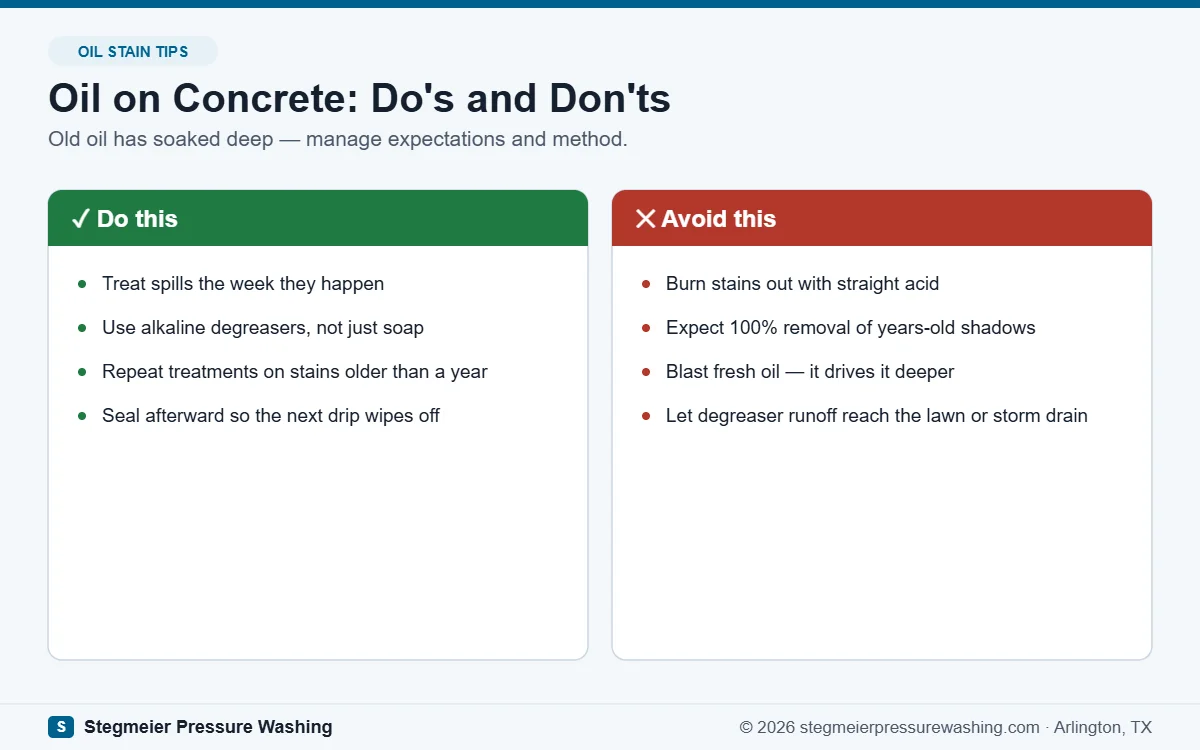
Concrete is not solid — it’s full of tiny pores. When oil drips onto your driveway, it doesn’t just sit on the surface. Within minutes, it begins wicking down into those pores, working its way deeper into the concrete over time. A fresh drip is still largely near the surface. A stain that’s been sitting for months or years can penetrate a quarter-inch or more into the slab.
This is why hosing down your driveway or scrubbing with dish soap does almost nothing for established oil stains. The surface may look momentarily cleaner, but the oil in the pores is still there and wicks back to the surface quickly.
DIY Methods That Work on Fresh or Minor Stains
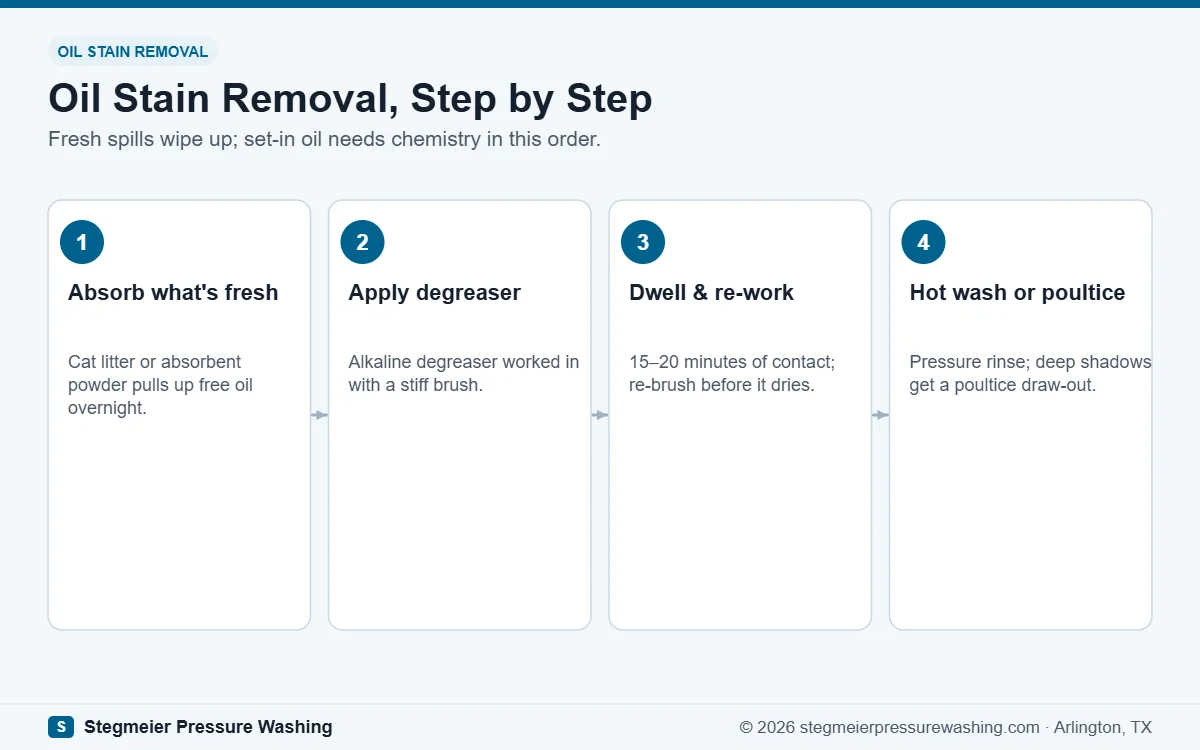
If an oil spill is fresh — meaning it happened in the last day or two — there are some DIY approaches worth trying.
Absorb it first. Before applying anything, pour an absorbent material directly onto the fresh spill. Cat litter, cornstarch, baking soda, or commercial oil-dry products all work. Let it sit for 30 minutes to an hour to draw as much surface oil out as possible before sweeping it up.
Dish soap and scrubbing. Apply a generous amount of dish soap (something with strong degreasing properties) directly to the stain, add hot water, and scrub with a stiff brush. Rinse thoroughly. For a fresh, minor stain, this can make a real difference. For an old stain, it will have minimal effect.
Commercial concrete degreasers. Home improvement stores sell concrete degreasers and poultice products designed specifically for oil removal. Applied correctly — with a dwell time and thorough scrubbing — they can lift moderately set stains better than household products.
The honest caveat: even with perfect DIY technique, old or deeply penetrated oil stains rarely fully disappear without professional equipment and chemistry. You can improve them, but you may not eliminate them.
When to Call a Professional
There are specific situations where professional concrete cleaning is the right call.
The stains are old. Anything more than a few weeks old has had time to penetrate deeply. Professional degreasers and hot-water pressure washing pull staining from deeper in the concrete than any consumer-grade approach can reach.
There are multiple stains or large affected areas. If you have years of drips from multiple vehicles, the cumulative staining across your driveway needs professional equipment to address it evenly.
You’re getting ready to sell your home. A stained driveway is one of the first things buyers notice. Getting it professionally cleaned before listing is a worthwhile investment.
You want it done right, once. Professional cleaning delivers a result you simply can’t replicate with a rented machine and consumer products.
How Professional Driveway Cleaning Removes Oil Stains
Professional concrete cleaning for oil-stained driveways involves a few steps that make the difference.
Degreaser pre-treatment. A professional-grade degreaser is applied directly to all stained areas and allowed to dwell — typically 10 to 20 minutes. This chemistry breaks down the oil at a molecular level and brings it toward the surface.
Hot water pressure washing with a surface cleaner. Commercial pressure washing equipment operates at much higher temperatures and pressures than rental units. The hot water activates the degreaser more aggressively and flushes the emulsified oil out of the concrete pores. A rotary surface cleaner attachment ensures even, streak-free coverage.
Edge detailing and final rinse. The entire surface is rinsed and inspected, with attention to edges and expansion joints where oil tends to concentrate.
Honest expectation-setting: Very old, deeply penetrated oil stains — especially ones that have been sealed over accidentally — may lighten significantly without fully disappearing. A good contractor will tell you this upfront. Anyone who guarantees complete removal of a 10-year-old oil stain is overpromising.
What About Sealing After Cleaning?
After a professional cleaning, many Arlington homeowners ask about sealing their concrete driveway to protect it going forward. Concrete sealer fills the surface pores, making the concrete dramatically less absorbent. Future oil drips sit on the surface rather than penetrating — meaning they’re much easier to clean up quickly.
If you’re investing in a professional driveway cleaning, it’s worth asking about a concrete sealer application at the same visit. It won’t cost much more and will protect your clean driveway significantly longer.
Oil that washes off a driveway ends up in storm drains; learn why that matters in Soak Up the Rain: What’s the Problem? from U.S. EPA.
Dealing with oil stains on your Arlington driveway?
Stegmeier Pressure Washing provides professional concrete cleaning with degreaser pre-treatment throughout Arlington, TX and the DFW area. Call or text (817) 773-8984 or get a free quote → to see what we can do for your driveway.
Related Guides
- How to clean a concrete driveway
- How to remove rust stains from concrete
- How much driveway cleaning costs
- Professional driveway washing in DFW
Related: How to remove tire marks from concrete
Oil Stain FAQs
What is the best way to remove oil stains from concrete?
Blot or absorb any fresh oil first, then scrub with a concrete degreaser and rinse with hot water or a pressure washer. Old stains may need a poultice or repeat treatments.
Does cat litter remove oil stains from concrete?
Cat litter works well on fresh spills because it absorbs oil before it soaks in. It does little for old stains that have already set into the concrete.
Can pressure washing remove oil stains?
Pressure washing alone rarely lifts oil. It works best after the stain has been pre-treated with a degreaser, and hot water helps break down the oil.
Will an old oil stain ever come out completely?
Many old stains fade a lot with proper treatment, but deep, years-old stains can leave a light shadow. Sealing the driveway after cleaning helps prevent new stains.