Proper gutter support is the difference between a system that lasts 20+ years and one that starts sagging after the first winter. Homeowners and installers often focus on gutter size and material, but the real structural strength comes from correct hanger spacing. If the distance is too wide, the gutter will bow, overflow, pull away from the fascia, and eventually fail.
This guide delivers the most complete, field-tested, contractor-level explanation so you can space gutter hangers correctly for your climate, roof type, and gutter material while also improving long-term performance and reducing issues during routine gutter cleaning.
Short Answer — How Far Apart Should Gutter Hangers Be for Proper Support?
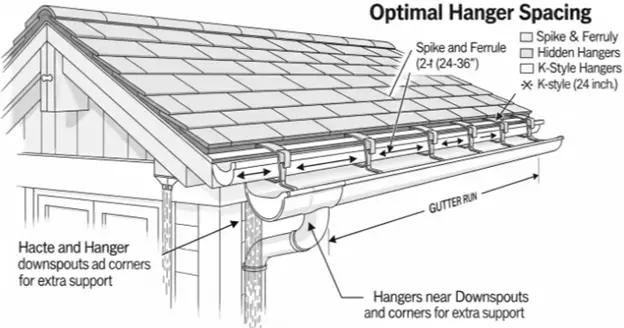
- Standard homes: 24–36 inches apart
- Heavy snow / ice regions: 12–18 inches apart
- Copper gutters: 12–24 inches apart (due to weight)
Correct spacing:
- Prevents sagging
- Maintains proper slope for drainage
- Extends gutter lifespan
- Handles water, debris, and snow load safely
How Far Apart Should Gutter Hangers Be in Snow-Prone vs Mild Climates?
Cold climates:
12–18 inches to handle snow and ice weight.
High-rainfall areas:
18–24 inches to support increased water volume.
Warm / low-load regions:
Up to 36 inches is acceptable if using strong hidden hangers and lightweight aluminum gutters.
Why Proper Gutter Hanger Spacing Matters
Structural load distribution
Even spacing spreads the weight of water, debris, and ice across the fascia board.
Preventing gutter sagging and separation
Wide spacing creates low points where water pools the #1 cause of gutter failure.
Water flow efficiency
Correct support keeps the designed slope intact, ensuring smooth drainage toward downspouts.
Ice, snow, and debris weight
In cold regions, gutters can hold hundreds of pounds of frozen load.
Long-term maintenance cost reduction
Proper spacing = fewer repairs, fewer leaks, longer fascia life.
Standard Gutter Hanger Spacing by Gutter Type
Aluminum Gutters
- 24–36 inches standard
- 18–24 inches in snow zones
Lightweight and the most forgiving.
Vinyl Gutters
- 18–24 inches
Vinyl flexes more, so tighter spacing is required.
Steel Gutters
- 24 inches recommended
Heavier than aluminum, it needs stronger support.
Copper Gutters
- 12–24 inches
High weight demands close spacing and premium fasteners.
K-style vs half-round:
Half-round gutters often use strap hangers, which typically require closer spacing.
Gutter Hanger Spacing Requirements by Climate and Roof Conditions
Heavy Snow Load Areas
Tight spacing prevents collapse under ice weight.
High Rainfall Regions
More water volume = more weight per linear foot.
Hot & Dry Climates
Wider spacing is acceptable due to minimal load.
Steep Roofs vs Low-Slope Roofs
Steep roofs dump water fast — closer spacing required.
Metal Roof vs Asphalt Shingle Roof
Metal roofs shed snow in sheets → reinforce hanger spacing.
Gutter Hanger Spacing Chart
| Condition | Recommended Spacing | Why It Matters |
| Standard residential | 24–36 inches | Balanced strength and cost |
| Snow & ice zones | 12–18 inches | Prevents gutter collapse |
| Copper gutters | 12–24 inches | Heavy material support |
| High rainfall areas | 18–24 inches | Controls water weight |
| Low debris environments | Up to 36 inches | Minimal load demand |
Types of Gutter Hangers and How Spacing Differs for Each
Hidden Hangers
- Strongest modern system
- Allows wider spacing in mild climates
Spike and Ferrule
- Traditional but weaker
- Requires tighter spacing for durability
Strap Hangers (for half-round gutters)
- Used where no fascia exists
- Needs close spacing for stability
T-Bar Hangers
- High-strength commercial option
- Can handle heavier loads
Wider spacing: Hidden hangers
Tighter spacing: Spike & ferrule systems
How to Space and Install Gutter Hangers Correctly
Tools and Materials Needed
Tape measure, chalk line, level, drill, corrosion-resistant screws, ladder.
Measure the Fascia and Mark Layout
Mark total gutter run and downspout positions first.
Calculate the Correct Gutter Slope
Standard: ¼ inch per 10 feet toward the downspout.
Mark First Hanger Position
Place the first hanger 6 inches from the end.
Maintain Consistent Spacing Across the Run
Follow your climate-based spacing plan.
Adjust Spacing Near Corners and Downspouts
Add extra hangers for reinforcement.
Final Alignment and Load Test
Fill the gutter with water to confirm zero sag.
Where to Place Extra Gutter Hangers
- Within 6 inches of corners
- On both sides of downspouts
- At roof valleys
- In ice-prone sections
These are high-load zones where failures usually start.
Common Gutter Hanger Spacing Mistakes to Avoid
- Spacing too wide → sagging and overflow
- Ignoring climate load requirements
- Uneven spacing
- Fastening into weak fascia
- Skipping reinforcement points
Building Code & Manufacturer Recommendations
IRC & Local Code Guidelines
Most codes follow general spacing rules but defer to manufacturer specs.
Why Manufacturer Specs Override General Rules
They are engineered for:
- Material thickness
- Load rating
- Hanger design
Always check product documentation.
Professional vs DIY Installation — Does Spacing Change?
How pros calculate load:
They factor roof pitch, drainage area, and snow load.
When DIY spacing fails:
Using 36-inch spacing in snow regions is the most common mistake.
Cost vs durability:
More hangers slightly increase cost but double system lifespan.
Maintenance Impact — How Correct Spacing Extends Gutter Life
- Prevents fascia rot
- Reduces joint separation
- Improves gutter guard performance
- Keeps slope intact for years
Seasonal inspection checklist:
- Check for dips
- Tighten loose fasteners
- Inspect high-load zones
FAQs — How Far Apart Should Gutter Hangers Be?
Can gutter hangers be 4 feet apart?
Only in very mild climates with lightweight aluminum gutters not recommended for long-term durability.
What is the maximum spacing for gutter hangers?
36 inches in ideal conditions.
How many gutter hangers per 10 feet?
Typically 4–6 depending on spacing.
Do you need closer spacing for 6-inch gutters?
Yes, because they carry more water weight.
Should spacing change with gutter guards installed?
Yes, guards add weight and require tighter spacing.
How close should hangers be to downspouts?
Within 6 inches on both sides.
Is 24-inch spacing strong enough for snow?
Yes for moderate snow, but 12–18 inches is safer for heavy snowfall.
How do I fix gutters with hangers spaced too far apart?
Install additional hangers between existing ones and re-secure the slope.
Pro Tips From Gutter Installation Experts
- Load testing trick: Fill the gutter with water before finishing the job.
- Chalk line alignment: Ensures perfectly straight installation.
- Over-engineer spacing: Especially in snow regions.
- Best fasteners: Stainless or structural screws into solid wood fascia.
Conclusion — Choosing the Right Gutter Hanger Spacing for Maximum Performance
The correct formula is simple:
Climate + Gutter Material + Roof Type = Perfect Spacing
For most homes:
- 24 inches on center is the gold standard for strength and longevity.
Tighter spacing costs slightly more today but prevents:
- Sagging
- Fascia damage
- Full gutter replacement
If your home is in a snow-prone or high-rainfall region, or you’re installing copper or 6-inch gutters, closer spacing is not optional it’s structural insurance and a smart move to protect your system from excess debris and runoff that often makes services like Stegmeier pressure washing and routine exterior maintenance more effective and longer-lasting.
When in doubt, follow manufacturer specs or consult a professional installer. Proper hanger spacing is the hidden detail that makes a gutter system perform flawlessly for decades.