Washing your house makes a big difference in how it looks, but the most common DIY mistake is using too much pressure. High pressure can force water behind siding, break window seals, strip paint, and leave marks in soft materials. This guide covers the safe way to do it, the way professional crews do.
The Short Answer
To pressure wash a house safely, apply a house-wash cleaning solution at low pressure, let it work for a few minutes, and rinse from the top down with a wide spray pattern. Save high pressure for concrete. Siding, brick, stucco, and trim are cleaned by the solution, not by the force of the water.
What You Need
- A pressure washer with a wide-angle nozzle (40 degree) and a soaping nozzle
- A house-wash cleaning solution made for exterior siding
- A garden hose and a working outdoor spigot
- Safety glasses, gloves, and non-slip shoes
- Plastic sheeting or tape for outlets, light fixtures, and door locks
Step-by-Step: How to Pressure Wash a House
Step 1: Walk the house and prep
Close every window and door. Cover exterior outlets and light fixtures. Move patio furniture, grills, and cars away from the walls. Look for loose siding, cracked caulk, or damaged screens and fix them first, because water will find those gaps.
Step 2: Protect plants
Wet down shrubs and flower beds with plain water before you start. A pre-soaked plant absorbs less cleaning solution. Rinse them again when you finish.
Step 3: Apply the cleaning solution
Use the soaping nozzle or a downstream injector to apply the house-wash solution at low pressure. Work from the bottom up so the solution does not streak down dry siding. This is the step that actually kills mildew and algae.
Step 4: Let it dwell, but do not let it dry
Give the solution a few minutes to break down dirt and growth. In Texas heat it can dry fast, so work in sections and avoid washing in direct afternoon sun.
Step 5: Rinse from the top down
Switch to a wide-angle nozzle and rinse from the top of the wall down, keeping the wand a few feet away and the spray angled downward. Never spray up under siding laps, into vents, or straight at windows.
Step 6: Check your work
Look for streaks or leftover green spots, especially on north-facing and shaded walls. Spot-treat and rinse again as needed.
Common Mistakes That Damage Homes
- Using a narrow nozzle on siding. A 0 or 15 degree tip can gouge wood, crack vinyl, and etch stucco.
- Spraying upward. This drives water behind siding and into wall cavities.
- Blasting windows. High pressure can break seals and fog double-pane glass.
- Relying on pressure instead of cleaner. Pressure removes the surface layer of mildew but leaves the roots, so it grows back faster.
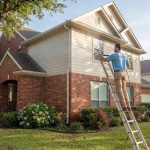
- Working from a ladder with a pressure washer. The kickback can knock you off balance. Use an extension wand or hire help for second stories.
Pressure Washing vs. Soft Washing a House
What most homeowners call “pressure washing a house” is really soft washing: low pressure plus a cleaning solution. It is the method we use on siding, brick, stone, and stucco because it cleans deeper and is gentler on the surface. See soft wash vs. pressure wash for a full comparison.
When to Hire a Pro
Consider professional house washing if your home is two stories, has heavy mold or algae, has delicate surfaces like older paint or stucco, or if you would rather not spend a weekend on a ladder. In Arlington and DFW, most house washes run $250 to $550, depending on size and condition.
How Often Should You Wash Your House?
Once a year is a good rule for most North Texas homes, with shaded walls sometimes needing more. Our guide on how often to pressure wash your house goes deeper, and how long it takes covers timing.
Ready for a quote? Call 817-580-9881 or request a free estimate online. We serve Arlington, Fort Worth, Dallas, Grand Prairie, Mansfield, and the rest of our DFW service areas.
Related: How to soft wash a house, step by step
FAQs
What PSI should I use to pressure wash a house?
Siding should be cleaned at low pressure with a wide-angle nozzle and a house-wash solution. High pressure is for concrete, not siding, windows, or trim.
What is the best way to pressure wash a house?
Apply a house-wash cleaning solution at low pressure, let it dwell a few minutes without drying, then rinse from the top down with a wide spray pattern.
Can pressure washing damage my house?
Yes. Too much pressure or a narrow nozzle can force water behind siding, break window seals, strip paint, and etch soft materials like stucco and wood.
How much does it cost to have a house pressure washed?
In Arlington and the DFW area, most professional house washes cost $250 to $550, depending on the size of the home and how much buildup there is.